




Do Reed Diffusers Work in AC Rooms and Open Floor Plans?
Yes, a reed diffuser works in an AC room and in an open floor plan, but the room changes the rules. Most diffuser advice was written for a small, closed, still room in a cooler country. The Indian home is rarely that. It is air-conditioned for half the year, often built as one open stretch of kitchen, living, and dining, and the air is always moving. A diffuser that holds in a sealed Western bedroom can read as nothing in a Delhi living room with the AC running.
The reason is simple. AC and open plans move air and dilute scent. A constant draught pulls fragrance away from the bottle and speeds up how fast it evaporates, so a weak, thinly mixed diffuser empties without ever filling the space. The fix is not a bigger bottle. It is more concentration, the right number of reeds, and smarter placement. A diluted diffuser dies at the bottle in these conditions. A concentrated one, set up properly, holds the room.
This is exactly where RAD LVNG diffusers are built to perform. The concentration is roughly twice the standard market level, which is the single thing that lets one bottle fill a 200 to 300 sq ft open space instead of giving up four feet away. The base matters too. It is formulated to release slowly and steadily in Indian conditions, so it does not flash off the moment it sits under a vent the way cheap alcohol-based diffusers do. Get the reed diffuser concentration and reed count right, and AC and open plans stop being a problem. Below is exactly how to set one up for a big, moving, air-conditioned Indian home, drawn from the same reed diffuser guide for India thinking we apply across the range.
Why does an AC room make a reed diffuser weaker?
An AC room challenges a reed diffuser because it keeps exchanging the air. The unit pulls air across the room, cools it, and pushes it back, and that constant movement does two things to your fragrance. It carries scent away from the bottle faster than still air would, and it speeds up evaporation, so the diffuser empties quicker than the days printed on the box suggest.
This is also where cheap diffusers fail worst. Most budget diffusers are built on alcohol or ethanol bases, and alcohol is volatile. Sit that bottle in the path of an AC vent and the base flashes off, throwing hard for a few days and then collapsing. You get a strong opening week, then a near-empty bottle that still looks full. The cool, dry, moving air of an AC room is the worst possible environment for a base that was always going to evaporate too fast. It is the same mechanism behind a diffuser dying early, which we break down in detail in why your reed diffuser died in two weeks.
RAD LVNG's base is formulated to release slowly and steadily in Indian conditions, so it diffuses at a measured pace instead of flashing off under the vent. That holds up far better in AC, but placement still matters. Do not put the bottle directly under or in front of the vent, where the draught is strongest. Set it a little to the side, on a shelf or table that sits in the room's gentler air, and let the moving air carry the scent outward rather than strip it off the reeds.
How do you scent an open floor plan that is really three rooms?
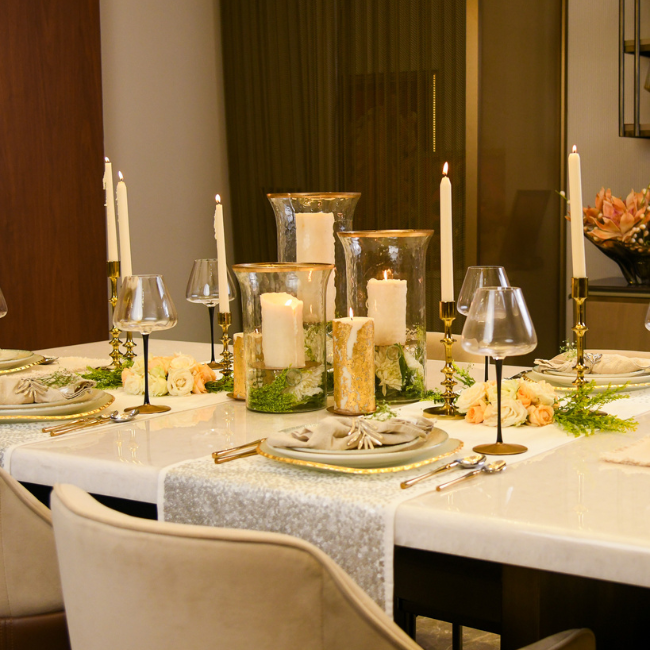
An open floor plan is one space on paper and three rooms in real life. Kitchen, living, and dining share the same air, with cooking smells drifting one way and the AC pushing air another. Treating it like a single small room is why one modest diffuser disappears in it. You have to scent it like the large, connected space it actually is.
The strategy is to go big on reed count and smart on placement. Run all 5 reeds rather than the 3 to 4 you would use in a closed bedroom, because more reeds mean more surface area pulling fragrance up and more throw into a larger volume of air. Then place the bottle at the natural air-movement junction, the spot where the three zones meet and air naturally flows between them, often the central console, the dining edge of the living area, or a shelf near where the rooms open into each other. Let the home's own air circulation do the distribution for you.
For a long or L-shaped open plan, one bottle in the middle can leave the far ends thin. The better setup is two diffusers as scent anchors, one at each end of the space. The same fragrance in both keeps the scent coherent as you move through, so the kitchen end and the far living corner read as one continuous mood instead of a strong patch near one bottle and nothing at the edges. You can browse the full home fragrance range to anchor both ends with a scent that suits the space.
Why concentration is what makes a big room possible
Concentration is the whole reason a reed diffuser can hold a big, moving room at all. Reed count and placement help you tune what you have, but if the fragrance is mixed too thin, there is simply not enough scent in the bottle to carry across a large space, no matter how many reeds you add or where you set it. Most diffusers in the Indian market are diluted to keep costs down, which is exactly why they barely reach your nose from four feet away in a still room, let alone a draughty open plan.
RAD LVNG diffusers are mixed at roughly twice the standard market concentration. That is not a marketing number to wave around, it is the mechanical reason one bottle can fill a 200 to 300 sq ft open space where a diluted one dies at the bottle. Twice the scent in the same bottle means there is enough fragrance leaving the reeds to survive the air movement and still reach the far side of the room. Coverage figures like 200 to 300 sq ft are general guidance, not a guarantee, because your ceiling height, AC strength, and reed count all shift the real number. But the principle holds: in a big or air-conditioned room, concentration is the floor everything else stands on. Without it, no amount of setup will save a weak diffuser.
How many reeds for a big or AC room?
Run all 5 reeds for a mid-to-large or air-conditioned room, and treat the stick count as your intensity dial. Each pack ships with 5 reeds. For a small-to-mid closed room, 3 to 4 is usually enough. The bigger and breezier the space, the more reeds you want working, because each reed is a channel pulling fragrance up and releasing it into the air. Fewer reeds in a draughty open plan is the most common reason a good diffuser underperforms. Once you are running the full 5 and a genuinely large space still reads thin, the answer is a second diffuser, not more sticks you do not have.
Then maintain it. Flip the reeds weekly, or once every 10 days, so the dry ends go down into the oil and the saturated ends come up to throw fresh scent. This single habit, which almost no brand bothers to tell buyers, is the difference between steady throw and a diffuser that fades by week two. In an AC room that runs hard, run the full 5, because the extra air exchange is pulling more scent away and you want every channel working to replace what the draught takes.
The dial works both ways. If the room ever reads as too strong, the fix is to remove a reed or two, not to buy a different bottle. With RAD LVNG, removing sticks is the more common adjustment, because the concentration is high enough that all 5 reeds in a smaller room can be more than you want. That is the opposite problem to the rest of the category, and a far nicer one to have.
What about high ceilings, duplexes, and stairwells?
High ceilings and duplexes change the maths because scent rises. Warm air and fragrance both drift upward, so in a double-height living room or a home with a central stairwell, a lot of your throw is heading for the ceiling instead of staying at nose level where people actually experience it. A diffuser placed low in a tall room can feel weak at standing height even while the air near the ceiling is well scented.
The fix is placement height and reading the air. Set the bottle a little higher than you would in a normal room, on a console, a mid-height shelf, or a mantel, so the scent starts closer to where you live in the space rather than at floor level. In a duplex, a stairwell is a natural chimney that moves air between floors, so a diffuser placed near the base of the stairs can let the home's own upward draught carry scent to the upper level. Use the architecture instead of fighting it. And in a genuinely tall room, run the full 5 reeds, and if that still does not fill the volume, add a second diffuser rather than reaching for sticks the pack does not include.
When should you switch formats or add a second piece?
Sometimes the honest answer is that one reed diffuser is the wrong tool for the size of the space. A very large hall, a long open plan above roughly 300 sq ft, a shop floor, a clinic waiting room, or an event space asks for more than a single bottle can give. In those cases, stop trying to make one diffuser do everything and build a small system instead.
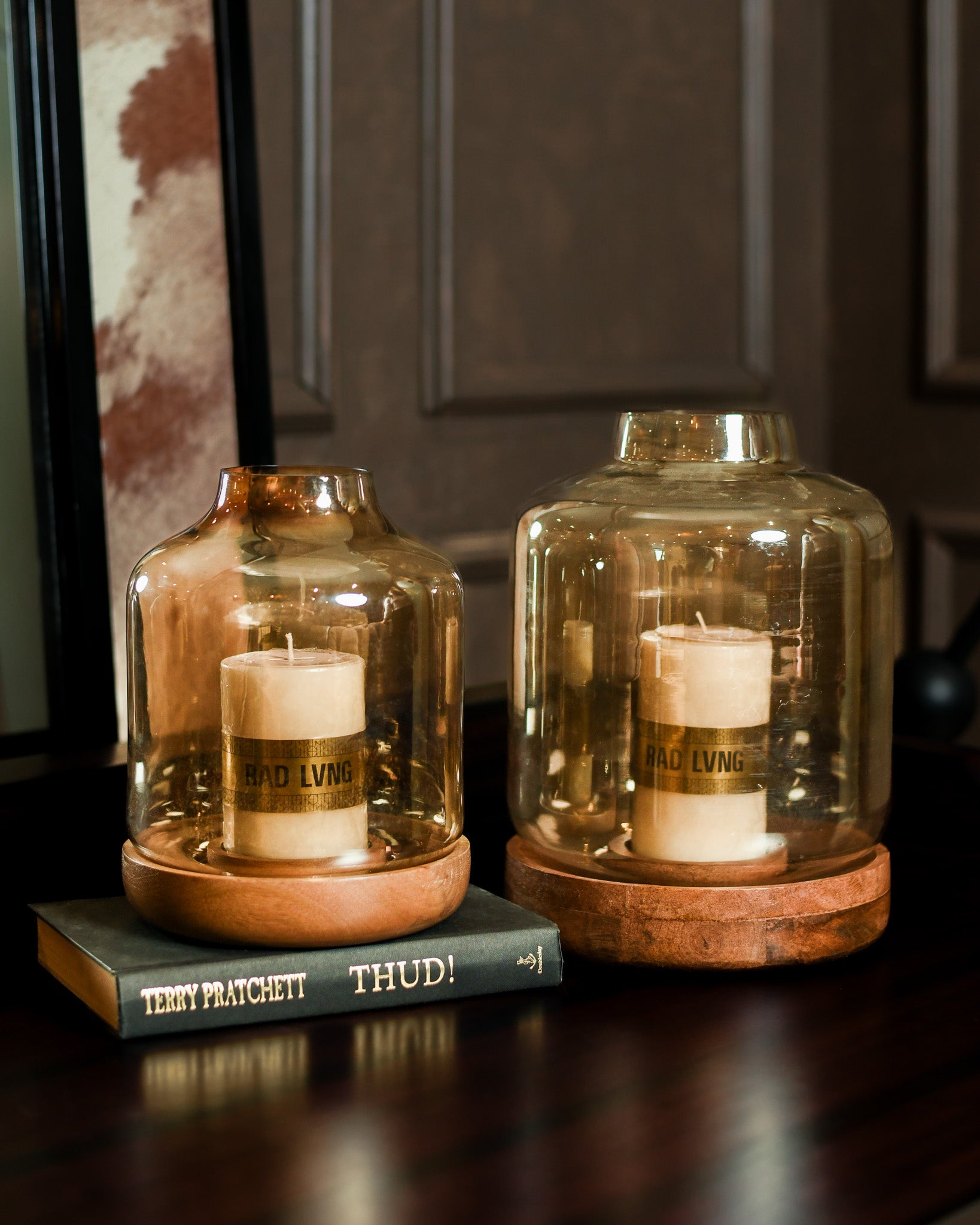
The first move is multiple diffusers, the two-anchor setup from earlier, scaled up to three or four bottles spaced through a very large area, all carrying the same fragrance so the space reads as one. The second move is to add a candle as a scent anchor on top of the diffuser. A reed diffuser gives you the always-on base layer that never needs lighting, and a lit candle adds a stronger, warmer burst exactly when you want it, when guests arrive or a dinner starts. That layered approach is its own craft, and we walk through it properly in how to layer home fragrance. If you want both formats matched in one fragrance, the candle and reed diffuser set pairs them by design. It is also the closest most homes get to the layered, always-on scenting of a good hotel lobby, which we cover in how to make your home smell like a 5-star hotel.
Big-space setup table
Use this as a quick reference for matching reed count and placement to the kind of space you are scenting. The square-foot ranges are general guidance, not a hard guarantee, because AC strength, ceiling height, and reed count all shift the real coverage.
| Space type | Reeds | Placement | Tip |
|---|---|---|---|
| Small-to-mid closed room (bedroom, study) | 3 to 4 | Side table or shelf, away from any draught | Flip reeds weekly. Remove a stick if it reads too strong |
| AC bedroom or cabin | All 5 | To the side of the vent, never directly under it | Run the full 5 if the AC runs most of the day |
| Mid-to-large living room | All 5 | Central console or shelf in the room's gentler air | Flip every 10 days, hold steady throw |
| Open floor plan (kitchen, living, dining) | All 5 | At the air-movement junction where the zones meet | For long or L-shaped plans, run two bottles as anchors |
| High-ceiling or double-height room | All 5 | Raised, on a mantel or mid-height shelf | Scent rises, so start it higher; add a second bottle if it stays thin |
| Duplex with stairwell | All 5 per floor | Near the base of the stairs and on the upper landing | Let the stairwell draught carry scent between floors |
| Very large hall or commercial space | Multiple bottles | Spaced anchors, same fragrance throughout | Add a candle anchor for a stronger burst when needed |
Across every row, the pattern is the same. Match reeds to the volume of air, place at the gentler edge of the moving air rather than in its path, and flip the reeds on schedule. The concentration in the bottle is what makes any of this possible. The setup is how you aim it.
How long will a diffuser last in an AC room?
A RAD LVNG reed diffuser lasts 30 to 45 days, and that range moves with your conditions. A hard-running AC room with the bottle near the vent will sit at the lower end, because more air exchange means faster evaporation. A gentler room holds longer, and many customers report longer than 45 days. The base is what keeps it steady rather than flashing off the way cheap diffusers do in dry, moving air.
How does the base help in AC compared to cheap diffusers?
The base is the quiet difference. Cheap diffusers use alcohol or ethanol, which is volatile and flashes off fast in the dry, moving air of an AC room, so they throw hard for days then collapse. RAD LVNG's base is formulated to release slowly and evenly in Indian conditions, so the fragrance does not race to evaporate. Under a draught, slow and steady is exactly what you want.
Should I use one big diffuser or two smaller ones in an open plan?
For most open floor plans, two diffusers beat one. A single bottle in the centre leaves the far ends thin in a long or L-shaped space, while two anchors, one at each end with the same fragrance, keep the scent continuous as you move through. If your open plan is compact and square, one bottle with all 5 reeds at the central junction can be enough. The longer the space, the stronger the case for two.
Where do I place a diffuser in a room with strong cross-ventilation?
Place it slightly back from the direct path of the draught, not in front of the window, balcony door, or AC vent where the air moves hardest. A spot just off the main airflow lets the moving air pick up scent and carry it into the room instead of stripping it straight off the reeds and out the window. Then run all 5 reeds, since cross-ventilation pulls more scent away and you are replacing what the breeze takes.
Can a reed diffuser scent a whole open kitchen, living, and dining together?
Yes, if you treat it as one large space rather than three small ones. Run all 5 reeds, place the bottle at the junction where the zones meet, and for a long layout, add a second diffuser as an anchor at the far end. Cooking smells in the kitchen zone are the main competition, so keep the diffuser toward the living or dining side. For an extra burst when hosting, a matched candle from the candle and reed diffuser set layers cleanly on top.
The short version
A reed diffuser absolutely works in an AC room and an open floor plan. The room just asks more of the bottle. Moving, air-conditioned, open-plan spaces dilute and carry scent away, so a thin, alcohol-based diffuser empties without ever filling the room. A concentrated one, mixed at roughly twice the standard market level on a base built to release slowly and steadily in Indian conditions, has enough scent to survive the air movement and hold the space.
The rest is setup you control. Run all 5 reeds for big or air-conditioned rooms, place the bottle at the gentler edge of the moving air rather than under the vent, and flip the reeds weekly or every 10 days. For very large or long spaces, two diffusers as anchors, or a diffuser paired with a candle, finish the job, since each pack only gives you 5 reeds to work with. Start with the reed diffuser collection, or explore The Room No. 11 if you want a single fragrance to anchor a whole open plan. Set it up for the room you actually have, and the air takes care of itself.


