





Is a Reed Diffuser Worth It? The Cost-Per-Day Math
A reed diffuser is worth it when you judge it by the days of real fragrance it gives you, not by the price on the sticker. That is the whole answer, and the honest version of the math has a twist most brand blogs skip. On raw cost per day, a RAD LVNG reed diffuser at Rs 1,099 to 1,299 over 30 to 45 days works out to roughly Rs 24 to Rs 43 a day, which is not cheaper than a Rs 300 bottle's roughly Rs 21 a day. If price per day were the only number, the cheap one would win. It is not the only number, and once you count the days the cheap bottle actually smells of anything, the picture flips.
Here is the catch the cost-per-day sum hides. The cheap diffuser's scent is gone by week one even with liquid still sitting in the bottle. You paid for fourteen days and got maybe seven of real fragrance, which makes its true cost per day of working scent far worse than the sticker suggests. The expensive bottle throws scent the entire 30 to 45 days. So the comparison was never premium-cheaper-per-day. It is full throw the whole time versus a strong first week and a quiet fortnight after, plus the repeat buys, the plastic in the bin, and the bottle you either keep or throw away.
This post does the math in the open and keeps it honest. Why the cheap bottle dies in two weeks, what the higher price actually buys, the hidden cost of buying throwaways on repeat, and the four reasons a premium diffuser earns its place even when it is not the cheapest per day. No mystique, no arithmetic that does not hold up. If you have ever watched a diffuser go silent halfway through the month, the guide on why your reed diffuser died in two weeks covers the chemistry. This one covers the money.
Why Does the Usual Reed Diffuser Price Math Go Wrong?
Most buyers compare bottle prices, when the honest comparison is price divided by days of working fragrance. Two diffusers sitting side by side at Rs 300 and Rs 1,199 are not two versions of the same product at two prices. They are two completely different quantities of the thing you are actually buying, which is scent in your room, over time.
There is a more careful version of the mistake too. Some buyers divide price by the days the bottle claims to last, which feels rigorous. It is closer, but it trusts the label, and the label is where cheap diffusers fail hardest. Across Indian reed diffuser reviews, short longevity is the single most common one-star complaint, showing up in the large majority of negative reviews category-wide. The bottle was bought, it smelled lovely for a week, and then nothing. By the label's math it lasted a month. By any honest measure the money was gone in fourteen days.
So the denominator has to change. Not days printed on the box. Days of fragrance, meaning the days during which someone walking into your room would actually notice it.
What Is Cost Per Day of Fragrance?
Cost per day of fragrance is the price of a diffuser divided by the number of days it noticeably scents a room. The key word is noticeably. A Rs 300 bottle costs Rs 21 a day if you trust the fourteen-day label, but if its throw is actually gone by day seven, you are paying closer to Rs 43 a day for fragrance you can smell, with the second week thrown in as decoration. A RAD LVNG diffuser at Rs 1,099 to 1,299 over a 30-to-45-day window works out to roughly Rs 24 to Rs 43 a day, except every one of those days is a day of real, full-room throw.
So the two bottles are not far apart on the raw sum, and the premium one does not magically come out cheaper per day. What separates them is what you are actually getting for the money. The cheap bottle's number assumes a fortnight of fragrance it does not deliver. The RAD LVNG number is honest all the way through, because the throw holds for the whole window. Same neighbourhood on price per day, completely different product underneath it.
The formula forces two uncomfortable truths into the open. First, a low sticker price is not a low cost once you only count the days the room actually smells of something. Second, a diffuser that has gone scent-dead has a remaining value of zero, whatever the liquid level says. The fluid may sit in the bottle for weeks more. You did not buy fluid. You bought a room that smells like something, and once that stops, every further day is storage, not value.
Run it on your own shelf. Take whatever you last paid, divide by the days you genuinely smelled it, not the days the bottle held liquid, and compare. That single number tells you more than any price tag.
Why Does the Cheap Diffuser Die in Two Weeks?
The cheap diffuser dies fast because of what it is dissolved in. Most budget diffusers use an alcohol or ethanol base, which is inexpensive and thin and evaporates quickly. In Indian heat, where summers push well past 40 degrees, that base flashes off far faster than the label ever assumed. The reeds dry, the throw collapses, and a bottle that promised a month is finished in a fortnight.
This is a base problem, not a fragrance problem. The scent oil might be perfectly decent. It simply has nothing left to travel up the reeds in once the carrier has evaporated into the summer air. It is the reason a diffuser can smell wonderful in an air-conditioned showroom and go quiet within days in a real Delhi or Mumbai living room.
RAD LVNG builds the base differently. Our base is formulated to release slowly and steadily in Indian conditions rather than racing to evaporate, which is the mechanism behind the 30-to-45-day window. The exact number moves with weather, room temperature and how many reeds you use, and plenty of customers report longer. You are not paying more for the same thing in a nicer bottle. You are paying once instead of paying two or three times.
Why Are Reed Diffusers Expensive? What the Price Actually Buys
A well-made reed diffuser costs more because of four inputs, most of them invisible at the moment you buy it.
1. Roughly twice the fragrance concentration. Fragrance is the most expensive thing in the bottle, so it is the first place a cheap diffuser economises, because the saving cannot be seen, only smelled, and only from a distance. RAD LVNG diffusers carry roughly twice the fragrance concentration of a typical standard-market diffuser. That is the difference between a bottle you have to lean in to notice and one that fills a 200-to-300 square foot room. The most common complaint in the entire category is "I cannot smell it from four feet away." Concentration is the answer to it.
2. Composed, multi-note scents instead of flat synthetics. Standard diffusers pour a single-note synthetic oil into a bottle and call it Rose or Lavender. It smells right for a second, then thin. RAD LVNG uses whole, layered scent compositions with a top, heart and base structure that evolve in the room rather than sitting flat, some carrying essential oil infusions, built on Indian-sourced oils. You are paying for a fragrance with architecture, not a chemical approximation of one.
3. A skincare-grade glass bottle that stays on the shelf. Every budget brand treats the bottle as packaging to be thrown out. RAD LVNG designs it as an object to be kept. The glass is skincare-grade, made to sit on a vanity or a console and be photographed, not hidden behind the cistern. When the fragrance is done, you have a vessel worth keeping, which matters to the math in the next section.
4. A base built to last in Indian heat. The base is the differentiator that drives the longevity. It is formulated to release slowly and steadily rather than flashing off the way the cheap evaporative bases do, which is what causes the two-week death. It is a better build, and the bottle you buy once instead of three times is the lower-waste one too.
If you want the full mechanics of how reeds, oil and base work together, the reed diffuser guide for India lays out the whole system, including how many reeds to use for which room size.
What Is the Hidden Cost of Buying Cheap?
The hidden cost of cheap is everything that does not appear on the Rs 300 sticker. The sticker shows one number. The real spend shows up across a year, in a bin, and in a feeling.
Start with the repeats. If a cheap diffuser lasts about two weeks of real fragrance, keeping one room scented year-round means buying it again and again. Four to six bottles a year is an easy estimate, and many people buy more. At Rs 300 a bottle that is Rs 1,200 to Rs 1,800 a year, for a room that still spends half its life smelling of nothing while you wait to repurchase. One RAD LVNG diffuser covers a far larger slice of that same year, with throw the whole way through.
Then the waste. Four to six bottles a year is four to six glass-and-plastic units into the bin, plus the packaging around each. The premium bottle is bought once and, crucially, kept. Buying fewer, better things is the lower-waste choice almost every time, and a reed diffuser is a clean example: the expensive option is also the one that does not pile up in landfill every fortnight.
And then the part nobody prices, the disappointment tax. The small sink of opening a box you were excited about, loving it for a week, and watching it fade while you tell yourself the next one will be different. That cost is real even though it never shows up on a receipt. Paying once for something that works is, quietly, the cheaper emotional purchase too.
When Is a Cheap Reed Diffuser Actually Fine?
A cheap reed diffuser is genuinely fine when you do not need it to last or to perform. There are honest cases for it, and pretending otherwise would just be a brand defending its price.
Buy the cheap one for a guest bathroom you barely use, where a fortnight of light scent is plenty and nobody is standing in it long enough to judge the throw. Buy it for a one-off event, a party or a single evening, where the bottle only needs to survive a few hours and the cost per day is irrelevant. Buy it for a space you simply do not care about, a utility corner or a storeroom, where any scent at all beats none and the math does not deserve a second thought.
The cost-per-day argument only matters for the rooms you live in. A living room, a bedroom, an entryway where guests form a first impression, a bathroom people actually visit. For those, you want fragrance that is reliably on, and the cheap bottle's two-week cycle stops being a saving and starts being a chore. For everywhere else, spend the Rs 300 and do not overthink it.
The Bottle Stays: A Bonus the Cheap One Does Not Have
The premium diffuser has a second life the cheap one never gets. When a budget bottle runs out, it is rubbish, because it was only ever packaging. When a RAD LVNG diffuser runs out, the skincare-grade glass vessel stays, an object on your shelf rather than landfill in a fortnight.
That changes the honest accounting. Part of what you paid for was never just the fragrance, it was the bottle as a piece of decor, designed to be displayed and kept. Customers build a shelf around it, photograph it, leave it out on the vanity. A cheap diffuser asks to be hidden and then thrown away. A well-designed one earns its spot and holds it after the scent is gone.
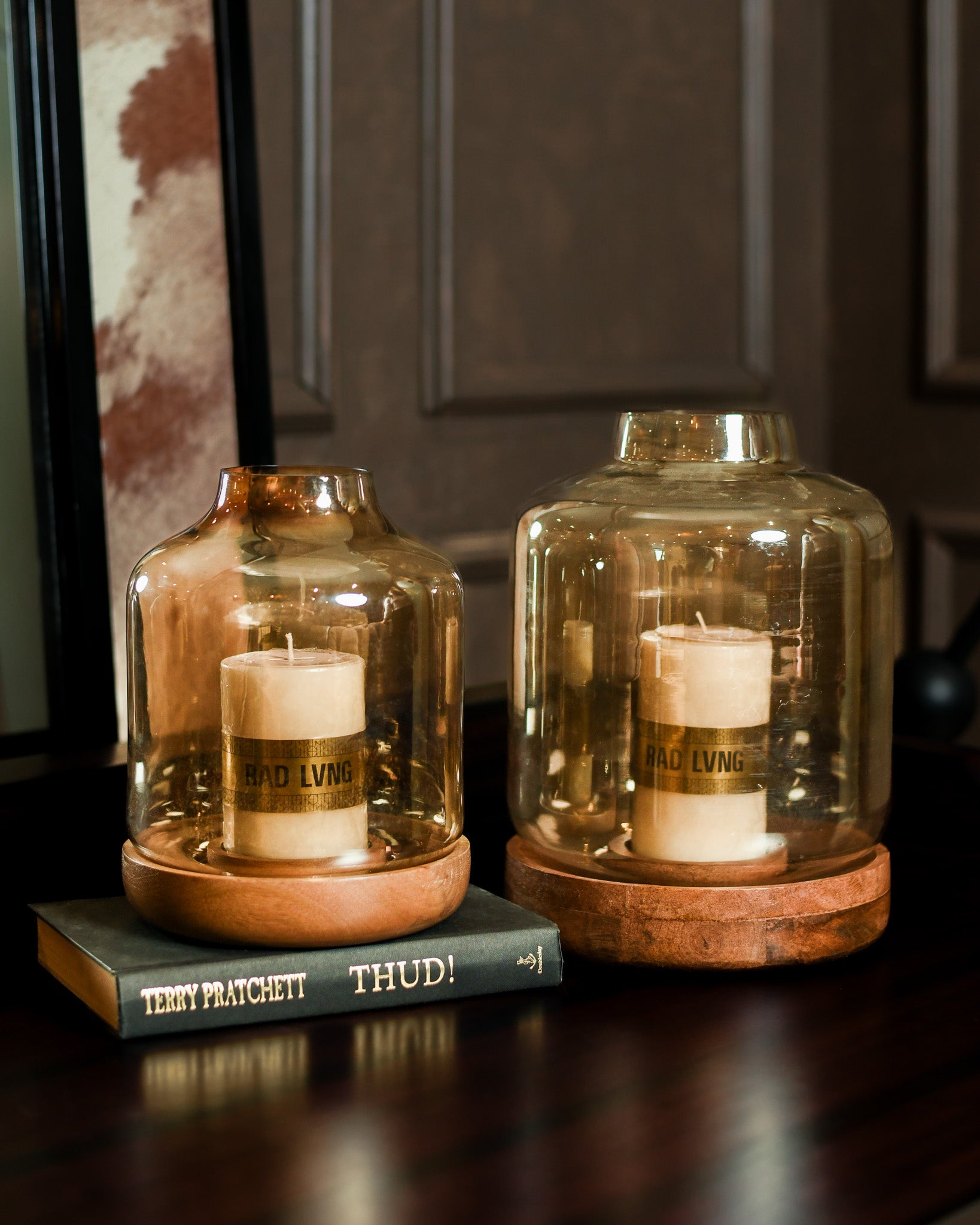
If you like the idea of a vessel that doubles as decor and a candle to anchor the same corner, the candle and reed diffuser set pairs the two, and the guide on how to layer home fragrance shows how to run them together so a room reads as scented rather than scattered.
The Worked Cost-Per-Day Table
Here is the whole argument in one view, and it is more honest than the version most brand blogs run. The figures use round assumptions: a cheap diffuser holding liquid for about 14 days but real throw for closer to a week, and a RAD LVNG diffuser across its stated 30-to-45-day window with throw the whole time. Run the same sum on whatever is on your own shelf right now.
| Option | Price | Days of real throw | Cost per day of actual fragrance | Throw quality |
|---|---|---|---|---|
| A typical cheap diffuser | Rs 300 | ~7 days (liquid lingers ~14) | ~Rs 43/day | Faint within days, scent gone well before the liquid |
| Standard mid-range diffuser | Rs 700 | ~14 days | ~Rs 50/day | Decent at first, fades through the month |
| RAD LVNG reed diffuser | Rs 1,099-1,299 | 30 to 45 days | ~Rs 24-43/day | Full room throw the entire window |
Look at what the table actually says. On paper, the cheap bottle's Rs 21-a-day sticker math looks like the bargain. But that number quietly assumes a fortnight of fragrance you never get. Once you only count the days the room genuinely smells of something, the cheap bottle costs about the same per day as the premium one, except the premium one is throwing scent the entire time and the cheap one went quiet in week one. The premium diffuser does not win by being cheaper per day. It wins because every day you pay for is a day that works, and then it keeps the bottle.
Reed count is part of the math too, since it is your intensity dial. Each pack ships with 5 reeds. Use 3 to 4 for a small-to-mid room and all 5 for a mid-to-large one, and flip them weekly, or once every 10 days, to keep the throw fresh. More reeds give more throw and shorten the window slightly; fewer reeds soften it and stretch it. You are in control of where in the 30-to-45-day band your bottle lands.
Reed Diffuser vs the Cheaper Habits
If you are weighing a reed diffuser against agarbatti rather than against another diffuser, that is a different cost-per-day question with a different answer, and the honest reed diffuser vs agarbatti comparison runs it properly. The short version: a diffuser is always-on with no flame, no smoke and no daily ritual, which is its own kind of value once you factor in the effort the cheap habit quietly demands.
For the rooms that matter, the logic holds across the whole home fragrance range. Judge by days of real fragrance rather than the sticker, and the bottle that fills the room for the full 30 to 45 days, then leaves you a glass vessel worth keeping, is the one that earns its place, even when it is not the cheapest number on a per-day calculator.
FAQ
Are reed diffusers worth it in India? Yes, when you judge them by days of real fragrance rather than the sticker. On raw cost per day, a RAD LVNG diffuser at Rs 1,099 to 1,299 over 30 to 45 days runs roughly Rs 24 to Rs 43 a day, which is not cheaper than a Rs 300 bottle's Rs 21 a day. But the cheap one's scent is gone by week one with liquid still in the bottle, so its real cost per day of working fragrance is far worse. The premium one throws the whole time, is bought once instead of two or three times a year, and leaves you a glass bottle worth keeping.
Why are some reed diffusers so expensive? The price buys roughly twice the fragrance concentration of a standard diffuser, composed multi-note scents instead of flat synthetics, a skincare-grade glass bottle made to be kept, and a base built to release slowly and steadily in Indian heat. Most of that is invisible at purchase, which is why cheap bottles save money where you cannot see it, only smell it, and only later.
How long should a reed diffuser last? A RAD LVNG reed diffuser lasts 30 to 45 days, varying with weather, room temperature and reed count, and many customers report longer. A typical cheap diffuser with an alcohol base often fades within about two weeks in Indian heat, and its scent usually goes well before the liquid does. Flip the reeds weekly, or once every 10 days, to keep the throw consistent through the window.
Why does my cheap reed diffuser stop smelling so fast? Most budget diffusers use an alcohol or ethanol base that evaporates quickly, and Indian summers above 40 degrees speed that up further. Once the carrier flashes off, there is nothing left to travel up the reeds, so the throw collapses. RAD LVNG's base is built to release slowly and steadily in Indian conditions, holding throw for 30 to 45 days instead.
How many reeds should I use in a reed diffuser? Each pack ships with 5 reeds. Use 3 to 4 for a small-to-mid room and all 5 for a mid-to-large room. Reed count is your intensity dial: add reeds for more throw, remove one or two to soften it. For a very large or open-plan space, a second diffuser beats overloading one bottle. Flip the reeds weekly, or once every 10 days, to refresh the scent. You can browse the full reed diffuser collection or a gift box built around one.


