




How to Make Your Whole House Smell Good (Without the Scents Fighting Each Other)
To make your whole house smell good, stop scenting room by room and start scenting it as one space. Pick one of two strategies: run a single signature scent everywhere, or build a coordinated palette where adjacent rooms share a scent family or step down gently in strength. The reason most homes smell chaotic is not weak fragrance. It is uncoordinated fragrance, a vanilla candle in one room and a sharp floral diffuser in the next, colliding at the doorway where the two airs meet.
That collision point is the whole problem. Every home has transitions: a hallway between bedrooms, the gap where the kitchen opens into the living room, the landing at the top of the stairs. Air moves through these gaps and carries scent with it. When two unrelated fragrances meet there, your nose registers neither as intended. It registers a muddle. This is why a house can be full of products you love individually and still smell like nothing in particular, or worse, like a fragrance counter at closing time.
The fix is scent zoning. You decide, on purpose, which scent lives where, and you make sure neighbouring zones either match or transition cleanly. Done right, a coordinated home fragrance plan means a guest walks from your entryway to your living room to your bathroom and the scent shifts the way a good playlist shifts, one track into the next, never a jolt. RAD LVNG is built for exactly this, because a single collection runs across reed diffusers, candles, mood sticks and tablets, so the same scent world can hold a whole floor together. Below is how to plan it, family by family, room by room.
Why Does My Home Smell Different in Every Room?
Your home smells different in every room because you bought each product separately, for its own room, with no plan connecting them. One scent went in the bedroom because it was on sale. Another went in the living room because a friend had it. A third lives in the bathroom out of habit. Each was a good decision alone. Together they have no relationship, so the house has no scent identity, just a set of unrelated rooms.
The friction shows up at the edges. Scent does not stay politely inside four walls. It drifts under doors, through open archways, along the path of every fan and AC. So the bedroom lavender meets the living room gourmand in the hallway, and the kitchen, already carrying dinner, adds a third layer on top. Your nose is good at noticing change and bad at sorting overlapping smells, so what you actually experience at every transition is confusion rather than any one fragrance.
There is also a volume problem. Two strong products in adjacent rooms do not blend into something twice as nice. They build a wall of scent at the doorway that is too much to walk through. The goal of zoning is to remove both problems at once: no clashing families, no doubled-up intensity. You can go deep on the building-block version of this in our guide to layering home fragrance, which covers how scents stack inside a single room. This post zooms out to the whole floor plan.
What Are Scent Families, and Which Ones Clash?
A scent family is a group of fragrances that share a character, so they sit together naturally instead of fighting. The four you will meet most often at home are warm and woody, fresh and citrus, floral, and gourmand. The rule of thumb is simple: scents from the same family always get along, and certain neighbouring families blend well, while two loud opposites placed side by side will clash.
Here is the quick map of what blends and what fights:
- Warm and woody (amber, sandalwood, oud, incense, saffron): rich, grounding, cosy. Blends with other woods, with warm spice, and with deep floral.
- Fresh and citrus (bergamot, tangerine, neroli, green notes): bright, clean, energising. Blends with light florals and soft herbs.
- Floral (rose, jasmine, neroli): the connector family. Light florals lean fresh, deep florals lean warm, so floral can bridge the other two.
- Gourmand (vanilla, coffee, caramel, cocoa): edible, comforting, sweet. Blends with warm woods beautifully. Fights almost everything sharp.
The clash to avoid: a heavy gourmand next to a sharp, high floral or a bright citrus. A coffee-vanilla candle and a sharp jasmine diffuser meeting in a doorway is the most common collision in Indian homes, because both are popular and nobody warns you they hate each other. Sweet and sharp do not resolve into anything. They cancel out. Keep gourmands with woods, keep citrus with light florals, and you have already avoided the worst of it. If you want the names attached to families, the RAD LVNG home fragrance range groups its collections into clear scent worlds, so picking a family is picking a collection.
How Do I Zone My Home by Scent Strength?
Zone by matching scent strength to the room, not by spreading the same intensity everywhere. Strong scents belong in big, airy rooms that can carry them. Subtle scents belong in small, sealed rooms that hold everything they are given. And the spaces in between, your hallways and landings, should stay nearly neutral so they can act as a buffer rather than a third competing fragrance.
The logic is air. A large living room with a fan running and a balcony door open scatters fragrance fast, so it needs a confident scent to register at all. Put a delicate one there and you will swear it does not work, when really the room just swallowed it. The opposite is true in a small closed bathroom or a study with the door shut. Those rooms hold scent, build it, and concentrate it. A strong product in a sealed two-by-two bathroom is overwhelming. A gentle one is perfect.
Transition zones are the secret most people miss. A hallway is not a room to scent. It is a corridor that air passes through, carrying whatever is on either side. If you load it with its own strong fragrance, you have created a third clash point exactly where two zones already meet. Keep hallways and landings light or empty, and they soften the handoff between zones instead of adding to the noise.
Big, Airy Rooms: Run It Strong
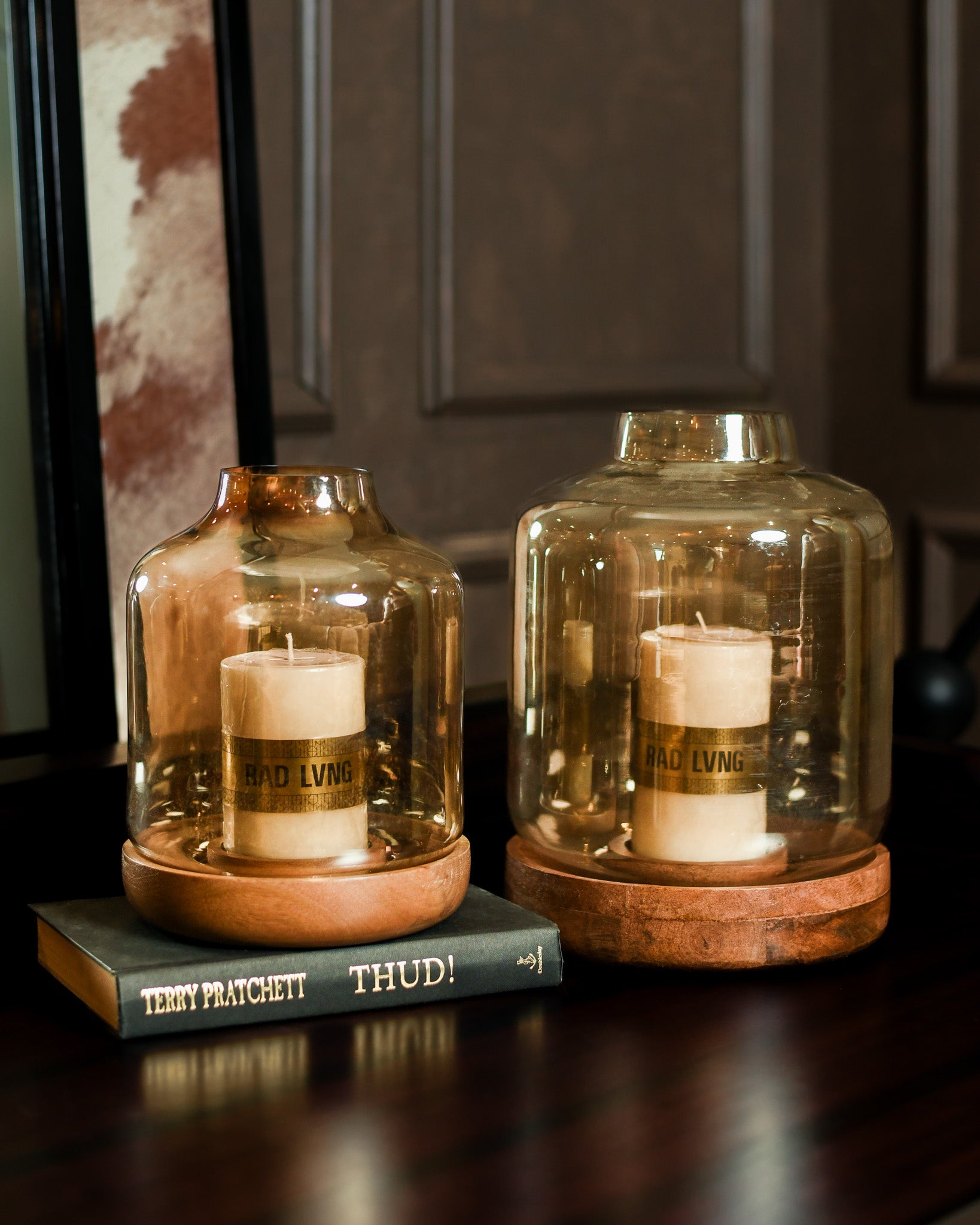
Living rooms, open kitchen-living floors and entryways can take your most confident scent. These rooms have volume and moving air, so fragrance needs presence to fill them. A RAD LVNG reed diffuser on all 5 reeds, or a larger collection candle while you are home, holds a big room the way it should be held. The entryway in particular is the one place to run hot on purpose, because it sets the first impression of the entire house the moment your door opens.
Small, Sealed Rooms: Keep It Subtle
Bathrooms, studies and small bedrooms hold scent, so they need less of it. A reed diffuser with the reed count dialled down to 3, or a fragrance tablet, gives a small sealed room a steady, gentle presence without tipping into too much. RAD LVNG reeds are formulated to release slowly and steadily, and because the fragrance load sits at roughly twice the standard market concentration, you genuinely can pull a reed or two to soften a small room. Most people never realise the strength is adjustable. If your diffuser ever feels faint instead, our guide on why you cannot smell your reed diffuser walks through the real reasons.
Transition Zones: Keep Them Neutral
Hallways, landings and stairwells are buffers, not stages. Leave them unscented, or give them only the faintest trace from an adjacent room. Their job is to let one zone hand off to the next without a hard line. A neutral corridor between a warm-woody living room and a fresh-citrus bedroom is what makes the two read as one coherent home rather than two arguments separated by a door.
What Is the Transition Rule Between Adjacent Rooms?
Adjacent rooms should share a scent family or step down gently in strength, never jump between opposites. This is the single rule that does the most work. If two rooms share a doorway, treat them as neighbours who have to get along. Either give them the same family, or give them a quiet relationship where one is a softer version of the other.
A clean transition looks like warm-woody in the living room flowing into a lighter warm-floral in the adjoining bedroom. Same broad territory, gentler in the second room. Or fresh-citrus in a sunny study stepping into a soft floral next door. The nose reads these as continuity. What it cannot handle is a jump: a heavy gourmand kitchen-living space opening straight into a sharp green-floral bedroom. Same family or a gentle step down, every time you cross a threshold.
The other half of the rule is strength, not just family. Even within one family, two rooms running full-strength on either side of an open archway will build that wall of scent at the join. So as you move from a big public room toward a small private one, step the intensity down as well. Strong in the living room, medium in the passage bedroom, soft in the far bathroom. Think of it as a gradient, loud at the social heart of the home and quiet at the edges, rather than a series of separate switches all flipped to maximum.
How Do I Stop My Scent Formats From Doubling Up?
Coordinate your formats the same way you coordinate your scents, so two strong sources are never working hard in adjacent rooms at once. A reed diffuser and a candle in the same collection are not meant to run at full force side by side. That is how you get a doorway you cannot walk through. The skill is deciding which format leads in each zone and letting the others play support.
A simple way to think about it by format:
- Reed diffusers are your always-on baseline. They hold a room continuously with no flame and no attention. One per zone is plenty.
- Candles are the moment-makers. Light one when you are in the room and hosting, not as a permanent second source on top of a diffuser.
- Mood sticks are a 60-minute reset, not a constant. One stick clears and resets a space, then steps back. They release much less smoke than ordinary incense and the scent stays for hours after the stick is done.
- Fragrance tablets are for small enclosed spaces only, like a wardrobe or a closed bathroom. Whole-bar, slow, and out of sight. Never on fabric.
The doubling-up trap is two diffusers, or a diffuser plus a lit candle of a different collection, in rooms that share air. Pick one lead format per zone and keep the others for moments or for separate, sealed spaces. For the full hosting-grade version of coordinating formats across a floor, our five-star hotel scent guide shows how the best spaces layer without overloading.
The RAD LVNG Way: One Collection, No Clashing by Design
The cleanest way to scent a whole home is to remove the clash at the source, and that is exactly what a single RAD LVNG collection does. Because each collection runs across reed diffusers, candles, mood sticks and tablets, you can scent every room from the same scent world and never have a doorway problem. The bedroom reed, the living room candle and the wardrobe tablet are all the same fragrance, so there is nothing to clash. The whole home simply reads as itself.
This is the signature-scent strategy, made effortless. Take Way Back Home, a warm world of saffron, jasmine and amberwood. Run the reed diffuser in the living room, the candle on the table when you host, mood sticks for the weekly reset, and the tablet in the wardrobe. One family, four formats, zero collisions. The house has an identity, and it is consistent from the front door to the back bedroom.
If you would rather have variation, build a coordinated palette from the same family instead of one scent everywhere. Pair two collections that share territory: the warm, woody, incense-led Room No. 11 for your living and social spaces, stepping down to a gentler warm scent in the bedrooms. Or anchor the kitchen-living zone with a familiar gourmand from Candle Cafe, your favourite cafe in wax, and keep it in the warm-gourmand lane throughout rather than jumping to anything sharp next door. Same-family palettes give you variety without the clash. And when you do want a daily reset between scent changes, a RAD LVNG mood sticks burn clears the air in about an hour and lets the next scent land clean.
What Are the Most Common Whole-Home Scent Mistakes?
The most common mistake is running too many different scents at once, with no plan connecting them. Three or four unrelated fragrances in one home guarantees a clash somewhere, usually at a doorway you walk through ten times a day. Fewer, coordinated scents always beat more, random ones. If you take one thing from this post, make it this: a home with two well-matched scents smells better than a home with six lovely ones at war.
The second mistake is stacking smells that were never meant to share air. Cooking is the big one. A kitchen mid-dinner is already a strong fragrance, so adding a bold gourmand candle on top, plus incense burning in the next room, gives you three heavy scents fighting in one zone. Let cooking be the scent while it is happening, keep any fragrance in that zone light, and reset afterward with a single mood stick rather than competing live.
The third mistake is overloading a small flat. A compact home is mostly transition zones, with rooms close together and air shared across all of them, so it behaves like one space, not many. Treat a small flat as a single zone with one lead scent, not as five rooms each needing their own product. One good reed diffuser in the main living area, a tablet in the wardrobe, and a mood stick for resets will do more for a small home than a product in every room ever could.
A Simple Whole-Home Scent Map
Use this as a starting template, then adjust to your own floor plan. The principle holds across home sizes: strong scents in big airy rooms, subtle in small sealed ones, neutral in the transitions, and the same family or a gentle step-down between any two rooms that share a doorway.
| Zone | Scent Strength | Best Format |
|---|---|---|
| Entryway / Foyer | Strong (first impression) | Reed diffuser, full reeds |
| Living / Open kitchen-living | Strong | Reed diffuser on all 5 reeds; candle when hosting |
| Hallway / Landing | Neutral (buffer) | None, or faint carry from an adjacent room |
| Main bedroom | Medium | Reed diffuser, 3 to 4 reeds |
| Small bedroom / Study | Subtle | Reed diffuser, 3 reeds, or a fragrance tablet |
| Bathroom (sealed) | Subtle | Reed diffuser, 3 reeds, or a fragrance tablet |
| Wardrobe (enclosed) | Contained | Fragrance tablet, whole-bar, never on fabric |
| Any room, weekly reset | One-time | Mood sticks, 60-minute burn |
Read the map as a gradient. Loud at the social heart of the home, quiet at the private edges, and a clean handoff in between. Keep every zone in the same family or a gentle neighbour of it, and the whole house will smell like one considered place rather than a collection of competing rooms.
Frequently Asked Questions
How do I make my whole house smell good without scents clashing?
Pick one strategy and commit to it. Either run a single scent across every room, or build a palette where neighbouring rooms share a scent family. Match scent strength to room size, keep hallways neutral as buffers, and never place a heavy gourmand beside a sharp floral. Using one RAD LVNG collection across formats removes clashing entirely.
Why does my home smell different in every room?
Because each product was bought separately for its own room, with nothing connecting them. Scent then drifts through doorways and meets at transitions, where unrelated fragrances collide into a muddle. The fix is scent zoning: planning which scent lives where so adjacent rooms either match or step down gently in strength rather than jumping between opposites.
Which home scents clash with each other?
Heavy gourmands beside sharp florals or bright citrus are the worst offenders, like a coffee-vanilla candle meeting a sharp jasmine diffuser at a doorway. Sweet and sharp cancel out instead of blending. Keep gourmands with warm woods, keep citrus with light florals, and pair within or beside the same scent family to avoid the clash.
Can I use one scent for my whole house?
Yes, and it is the easiest way to a coherent home. A single signature scent across every room removes all clashing by definition. RAD LVNG makes this simple because one collection spans reed diffusers, candles, mood sticks and tablets, so the same fragrance can run from your entryway to your wardrobe with nothing to fight against.
How do I scent a small flat without overloading it?
Treat a small flat as one zone, not many. Rooms are close and share air, so it behaves like a single space. Use one good reed diffuser in the main living area, a fragrance tablet in the wardrobe, and a mood stick for occasional resets. Avoid putting a separate product in every room, which guarantees a clash in such a compact space.