




How to Stop Cooking Smells Taking Over Your Living Room
To stop cooking smells taking over your living room, you have to do two things in order. First, clear the air: turn on the exhaust, open a window, and let the kitchen ventilate before, during, and after you cook. Second, once the air is moving and the heavy smell has dropped, scent the space with something that has enough throw to actually re-set a room. Fragrance alone, sprayed over raw tadka or frying smell, does not work. It just sits on top and makes a confusing mix of fried onion and jasmine.
This matters more in Indian homes than almost anywhere else, and not because of how we cook. It is because of how our homes are built. In most Indian flats and houses, the kitchen opens straight into the living room. There is no door to close, no buffer zone. So the smell of daily tadka, frying, fish, and ground masala does not stay in the kitchen. It drifts out, settles into the sofa, the curtains, the rug, and lingers long after the food is on the table.
That is the honest version most fragrance brands will not tell you. No diffuser, candle, or spray "removes" cooking smell on its own. What it does is work alongside ventilation to reset the space and hold a clean baseline. At RAD LVNG, our reed diffusers run roughly twice the concentration of a typical diffuser, which is the kind of throw you need in an open kitchen-living layout, not a faint plug-in that gives up by dinner. Get the order right, clear then scent, and your living room stops smelling like lunch by evening.
Why do cooking smells cling to the living room?
Cooking smells cling because frying and tempering release oil particles into the air, and those particles are sticky. They do not just float around and fade. They settle onto soft surfaces, your sofa cushions, curtains, rugs, cushion covers, and bond there. That is why a room can smell of yesterday's fish curry even after the kitchen itself seems fine.
This is the part people miss. You can clear the air completely and the room can still smell of food, because the smell is no longer in the air. It is in the fabric. Hard surfaces like tiles and glass wipe clean easily. Soft furnishings hold on. The more fabric your living room has, the more it acts like a sponge for every meal you cook.
Open-plan Indian homes make this worse in a specific way. When the kitchen and living room share one volume of air, every burst of frying or tempering pushes oil-laden air directly across the soft furnishings a few feet away. Over weeks, layers build up. This is also why airing out matters more than any product you can buy. Ventilation pulls the loaded air out before it has a chance to settle. Skip that step and you are just adding fragrance on top of a sofa that already smells of masala.
Step one: clear the air before you reach for fragrance
Clearing the air is always the first move, and it is non-negotiable. Run your exhaust or chimney on full before you start cooking, not after. Open a window on the opposite side of the room so air moves through rather than swirling in place. Cross-ventilation does the real work here, pulling cooking air out instead of pushing it around.
Here is the honest order to follow every time you cook something heavy:
- Switch on the chimney or exhaust before the kadhai goes on the heat.
- Open a window or door across the room to create a through-draft.
- Keep the exhaust running for ten to fifteen minutes after you finish, while smells are still airborne.
- If you have a ceiling or pedestal fan, point it toward the open window to push loaded air out.
- Only once the air has cleared do you bring in fragrance.
That last point is the one most people get wrong. Spraying or lighting something while the room is still thick with frying smell does not cancel it out. The two smells simply layer. You end up with a living room that smells of fried food and synthetic florals at the same time, which is worse than either one alone. Air first. Scent second. Always in that order.
If your kitchen has no exhaust or a weak one, ventilation becomes even more important. Cook with windows open, keep a fan running, and give the room longer to clear before you scent it. A diffuser cannot do the job of an open window. Nothing can.
Step two: scent with enough throw to reset the room
Once the air is clear, you scent the space, and this is where weak products fail completely. A kitchen-living room is a large, air-moving zone. To re-set it you need fragrance with real throw, enough to fill the volume and hold against the next round of cooking. A faint product disappears the moment you fry anything.
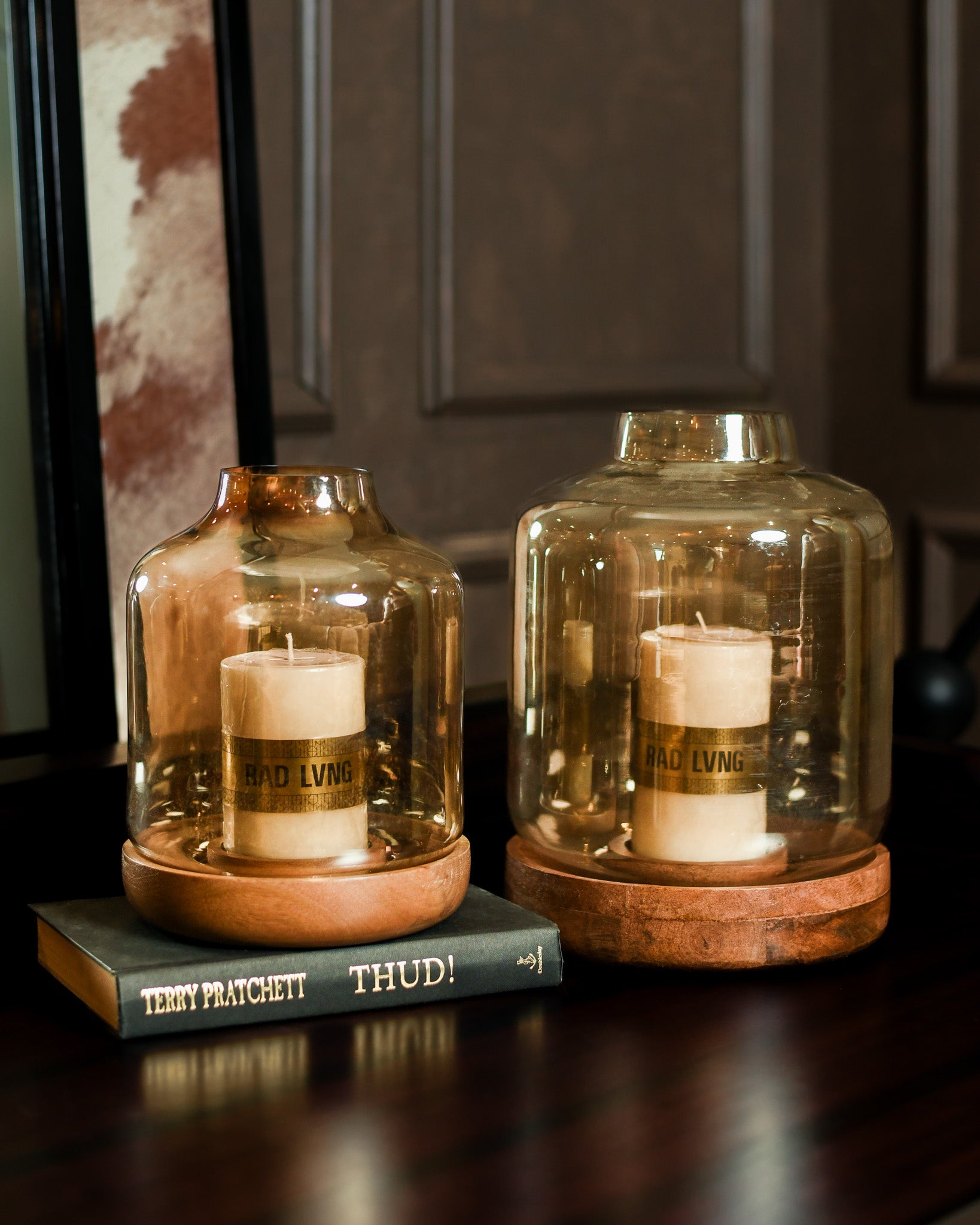
This is exactly the gap our reed diffusers were built for. They are formulated to release slowly and steadily, at roughly twice the concentration of an ordinary diffuser, so they hold a fragrance baseline across an open layout instead of fading by lunch. A diffuser like this becomes the always-on layer, working in the background while you cook, clean, and host. If you have ever wondered why a weaker one seems to vanish, our guide on why you can't smell your reed diffuser walks through the throw problem in detail.
Placement matters as much as strength. Put the diffuser at the room's air-movement point, near where air flows between the kitchen and living area, on a console, side table, or shelf in the path of that flow. The moving air carries the fragrance through the space instead of leaving it pooled in one corner. Browse the full reed diffuser collection to find a scent built to hold in a busy room.
For the sharp reset after a heavy meal, you want something more immediate. A candle or a mood stick clears the residual edge fast. Our mood sticks give a 60-minute reset, one stick burned right after you cook, and they are bamboo-free and charcoal-free with much less smoke than ordinary incense. The scent stays for hours after the stick finishes. They are the post-meal reset; the diffuser is the all-day baseline.
What format strategy works for a cooking zone?
The format strategy for a cooking zone is two layers working together: an always-on diffuser holding a baseline, plus a mood-stick or candle reset after each heavy meal. One product alone cannot do both jobs. The diffuser maintains the room between cooking sessions; the reset clears the spike right after the kadhai comes off the heat.
This is why a subtle plug-in fails in this exact spot. Plug-ins are tuned for small, enclosed rooms like a bathroom or a study with a door. Drop one into an open kitchen-living space and it is completely outmatched by the volume of air and the strength of daily frying. It scents the socket it is plugged into and not much beyond. You need a layer with real throw at the air-movement point, then a sharp reset on demand.
Think of it as two tools for two different problems. The baseline problem, your living room slowly absorbing the smell of every meal, is solved by a strong reed diffuser running continuously. The spike problem, the wall of smell right after you fry fish or grind a fresh masala, is solved by a mood stick or a candle lit for the reset. Our Candle Cafe collection is full of warm, rounded scents that suit a post-meal reset, the kind of familiar coffee-and-spice profiles that sit comfortably over a kitchen rather than fighting it.
For a very large open-plan home, one diffuser may not be enough. A standard pack comes with five reeds, and for a big open layout you use all five to maximise throw. For an unusually large or double-height living space, a second diffuser placed at the far end holds the baseline more evenly. Our piece on how many reed sticks you should use breaks down exactly how to dial intensity up or down by room size.
Which scents hold up over cooking smells?
Warmer, rounder scents hold up best over cooking smells. Profiles built on wood, amber, spice, coffee, vanilla, and resin have weight and depth, so they read as intentional next to food rather than getting overwhelmed by it. They share some of the warm, savoury register of cooking, which is why they sit comfortably in a kitchen-living space instead of clashing.
Light, airy florals struggle here. A delicate rose or a thin "fresh linen" scent is the first thing to disappear under frying smell, and when it does survive it often clashes, sweet flowers sitting awkwardly over fried onion. The contrast is too sharp. You notice the gap between the two smells, which is exactly what you are trying to avoid.
This is where collection choice matters. Our Room No. 11 collection is built on oud, incense, and warm woods, the kind of deep, smoky-warm profile that holds its ground in a busy open layout and reads as deliberate next to a kitchen. For something softer but still substantial, the warm coffee-and-spice profiles in Candle Cafe sit naturally over food smells because they live in the same warm family. The whole home fragrance range is built around layered, multi-note blends rather than thin single notes, which is part of why they hold up where a one-dimensional scent fades.
The rule of thumb: if a scent is light enough to feel like a "fresh" spray, it is too light for a cooking zone. Reach for depth. Warmth competes with food smell on equal terms. Lightness gets buried.
Don't forget the soft furnishings
The curtains and the sofa hold the cooking smell, not just the air, so they need their own attention. You can scent the room perfectly and still catch a stale whiff every time you sit down, because the fabric next to you has absorbed weeks of cooking. Treating the air without treating the fabric only solves half the problem.
Soft furnishings need regular airing and washing, not fragrance. Pull curtains back and open windows on a dry, breezy day to let them release what they have absorbed. Wash or dry-clean curtains, cushion covers, and throws on a sensible cycle, more often if your kitchen opens directly into the living room and you cook heavy meals daily. Vacuuming the sofa and rug lifts settled oil particles before they set in deeper.
A small habit helps a lot here: keep soft furnishings away from the direct line of frying where you can. If your sofa sits right in the path between the kadhai and the open window, it takes the full load of every meal. Even shifting it slightly out of that direct airflow, or keeping a washable throw over the most exposed cushions, reduces how much the fabric drinks in. Fragrance maintains a clean room. Fabric care stops the room from quietly turning into a sponge.
The honest bit: fragrance works with ventilation, not instead of it
No fragrance product removes cooking smell on its own. This is the line the category tends to skip, and it is the most useful thing to know. A diffuser, candle, or mood stick works alongside ventilation. It holds a clean baseline and resets the room once the air is moving, but it cannot cancel raw frying smell out of thick, unventilated air. Anyone telling you a single product alone kills tadka smell is overselling.
Here is the mechanism, plainly. Ventilation removes the smell. Fragrance replaces it with something better. If you skip ventilation and lean only on fragrance, you are layering scent over a problem that is still there, and the result is that confusing mix of food and perfume. If you ventilate but never scent, the room smells neutral at best and faintly of fabric-trapped meals at worst. The two work as a pair. One clears, one holds.
We would rather tell you this than sell you a fantasy, because the fantasy is exactly why so many people feel let down by home fragrance. They buy something expecting it to erase cooking smell, it does not, and they conclude the product is useless. The product was never going to do that job alone. Paired with a window and an exhaust fan, though, a strong diffuser and a post-meal reset genuinely keep an open kitchen-living space smelling intentional. That is the realistic promise, and it is one we are happy to stand behind.
A post-cooking reset routine
Here is a simple routine to run after any heavy meal, so your living room is clear by the time you sit down in it:
- Keep the exhaust or chimney running for ten to fifteen minutes after the cooking is done.
- Keep a window open across the room so air keeps moving through, not around.
- Wipe down the hob and counters, since lingering oil on surfaces keeps releasing smell.
- Once the air has cleared, light one mood stick for a 60-minute reset, or burn a candle, to clear the residual edge.
- Let your always-on reed diffuser hold the baseline through the rest of the evening.
- Air out curtains and soft furnishings on a dry day every week or two, and wash them on a sensible cycle.
Run this consistently and the difference compounds. The fabric stops accumulating layers of old meals, the air clears fast each time, and the diffuser holds a clean scent in between. Your open kitchen-living room ends up smelling like a space someone thought about, rather than a space that smells of whatever you cooked last. That is the whole goal, and it comes from the routine, not from any one product doing magic. If incense smoke is part of your concern, our note on why incense smoke fills an apartment covers the low-smoke approach, and for the bigger picture on making a space smell considered, see how to make your home smell like a 5-star hotel.
Frequently asked questions
How do I get rid of cooking smell in my house in India?
Clear the air first, then scent it. Run the exhaust and open windows on opposite sides for cross-ventilation before, during, and after cooking. Once the air is moving and the heavy smell has dropped, bring in a strong reed diffuser to hold a clean baseline. Fragrance works with ventilation, never instead of it.
Why does my kitchen smell end up in the living room?
In most Indian homes the kitchen opens straight into the living room with no door between them, so cooking air drifts freely into the living space. Oil particles from frying and tempering settle into the sofa, curtains, and rugs nearby, which is why the smell lingers long after the food is served and the kitchen looks clean.
Can a reed diffuser remove fried food smell on its own?
No. A reed diffuser holds a clean fragrance baseline and resets a room, but it cannot remove raw frying smell from unventilated air. It works alongside ventilation. RAD LVNG reed diffusers run at roughly twice the concentration of an ordinary diffuser, giving them the throw to hold in an open kitchen-living layout once the air is moving.
What scents work best over Indian cooking smells?
Warmer, rounder scents work best, profiles built on wood, amber, spice, coffee, vanilla, and resin. They have the depth to read as intentional next to food rather than getting overwhelmed. Light florals and thin fresh scents fade fast under frying smell and often clash with it, so reach for warmth and weight instead.
How often should I wash curtains and sofa covers to control cooking smell?
Air out curtains and soft furnishings on a dry, breezy day every week or two, and wash or dry-clean them on a sensible regular cycle, more often if your kitchen opens directly into the living room and you cook heavy meals daily. Fabric absorbs oil particles from cooking, so fragrance alone will not fix a sofa that has been soaking up meals for weeks.