




The Complete Guide to Scented Candles for Indian Homes
There is a specific kind of disappointment that most Indian candle buyers know well. You spend good money on a scented candle that looked and smelled promising in the store or in a product video. You light it at home. You wait. And then, twenty minutes later, you walk in from the next room and notice nothing. The room does not smell different. The candle is burning, the wax is pooling, and the scent has essentially vanished into the air conditioning or the open windows or the smell of whatever was cooked for dinner.
This is not bad luck. It is not a fluke. It is a predictable outcome driven by how most scented candles are made and why Indian home conditions expose the weaknesses in most of them.
This guide covers every variable that determines whether a scented candle actually performs in an Indian home: what fragrance load means and why it matters more than wax type, how to read a candle size for your room, the first burn ritual that will either protect your candle or ruin it permanently, how to interpret burn time claims honestly, and how to choose the right candle as a gift without relying on guesswork. By the end, you will know exactly what to look for and why, regardless of what you are shopping for or what your budget is.
Why Most Scented Candles in India Do Not Actually Smell (the One Variable That Explains It)
The single most common complaint across every scented candle review platform in India is not the price, not the burn time, not the packaging. It is this: the candle does not smell like anything.
Research across Amazon India reviews, Reddit communities, and buyer forums consistently shows that weak or absent scent throw accounts for roughly 42% of all coded negative feedback about scented candles in India. Nearly half of all complaints, from buyers at every price point, are about one thing: the room does not actually smell like the candle that is burning in it.
There is a specific term for how well a lit candle disperses fragrance into a room: hot throw. Cold throw is how a candle smells when you put your nose near an unlit wick. Hot throw is what the room smells like when the candle has been burning for twenty minutes. A candle can have excellent cold throw and terrible hot throw. Most buyers discover this too late.
What determines hot throw? The primary variable is fragrance load, expressed as a percentage of the candle's total weight. A candle with 6% fragrance load contains 6 grams of fragrance oil per 100 grams of wax. A candle with 10% fragrance load contains 10 grams. That gap is enormous in practice. In a room with open windows, competing kitchen smells, or an air conditioning unit running, a 6% candle often disappears entirely into the ambient air. A candle at 9 or 10% has enough fragrance concentration to push through those conditions and fill the room.
Most budget and mid-range Indian candles sit between 6% and 8% fragrance load. This is enough to smell good in a closed drawer or right next to the candle. It is often not enough to fill a living room in an Indian home where the kitchen, incense from a nearby puja space, or natural ventilation compete for air space.
The cure time of a candle before it reaches you also affects throw. Fragrance oil bonds more deeply and evenly into wax when the candle is allowed to rest after pouring, typically for four to seven days at minimum. Many Indian producers ship candles within 24 to 48 hours of pouring. The result is a candle where fragrance is concentrated near the surface rather than distributed through the wax, which means the scent is reasonably strong for the first burn and then noticeably weaker in subsequent sessions as the surface fragrance depletes.
Indian home conditions compound all of this. The average Indian urban home is not a sealed, climate-controlled room. It has cross-ventilation by design, especially in older construction. Cooking is done daily and produces strong ambient smells. Many families burn incense regularly, which creates a baseline fragrance environment that a low-load candle cannot compete with. Air conditioning pulls air through a room and distributes scent quickly, which means it can help a strong candle but dilutes a weak one even faster. Humidity levels in coastal cities and during monsoon months change how fragrance molecules travel through air, often suppressing throw in ways that the same candle would not experience in a dry European or North American room.
The implication is straightforward. A candle built to a 6% fragrance standard for a sealed, temperate living room will consistently underperform in an Indian home. This is not a brand quality failure in most cases. It is a specification failure. The candle was not made for the conditions it is being used in.
When shopping for scented candles in India, fragrance load percentage is the first number to look for. If a brand does not disclose it, that itself is information. Brands confident in their fragrance load tend to mention it. Those who do not state it are often working with numbers they would prefer buyers not compare.
The other factor worth knowing is that fragrance load and wax type are separate variables that are often confused in marketing. A candle can be 100% soy wax at 6% fragrance load and still have weak throw. A candle can use a wax blend at 10% fragrance load and fill a room consistently. Wax type matters, but it does not determine throw on its own.
Soy vs Paraffin: What Actually Matters in Indian Conditions
The soy vs paraffin debate dominates almost every candle buying conversation in India. Buyers ask about it in reviews, in Reddit comments, in DMs to brands. It has become the primary lens through which Indian candle buyers assess quality. And while the distinction is real, the way it is framed in most marketing is misleading in a specific way that leads to poor purchasing decisions.
The short version: soy wax is genuinely better in several respects. It burns cleaner, meaning it produces less soot. It is derived from a renewable source rather than petroleum. It has a lower melt point, which means the fragrance releases more gently through the burn. These are real advantages and they are worth paying for.
But soy wax does not, on its own, solve scent throw. This is the part that most Indian candle marketing either omits or obscures.
The reason this matters in India specifically is that the wellness and clean-living conversation around candles has created a straightforward equation in many buyers' minds: soy = good, paraffin = bad, therefore soy candle = good candle. Many brands have capitalised on this by leading their marketing almost entirely with the soy wax claim, while not improving fragrance load or cure time. The result is candles that are technically cleaner but still do not fill a room with scent.
The combination that actually produces a well-performing candle is: a quality wax base, a fragrance load high enough to push through real Indian home conditions (9% and above), and a cure time long enough for fragrance to bond properly through the wax.
Indian fragrance buyers asking "is this soy wax?" are asking the right question but not the complete question. The complete question is: what is the fragrance load, what is the cure time, and is this formulation tested for the kind of Indian home I actually live in?
There is also a practical reality about soy wax in Indian conditions that most brands do not mention honestly. Natural soy wax has a lower melting point than paraffin, which is a feature in temperate climates and a minor challenge in Indian summers. Soy candles can develop slight surface irregularities during transit in extreme heat, particularly in the April to June period. This is a natural characteristic of soy wax, not a defect. The fragrance performance is not affected. A brand that formulates honestly for Indian conditions will acknowledge this rather than pretend it does not happen.
The short guide for Indian buyers: soy wax is the better choice and it is worth seeking. But do not buy a soy candle with low fragrance load expecting strong throw. Wax type is the floor of quality. Fragrance load and cure time determine whether the candle actually performs.
If you want to read a deeper comparison of the two wax types and their specific performance differences, the detailed breakdown is covered in our soy vs paraffin candle guide.
How to Choose the Right Candle Size for Every Room
Candle size guidance is one of the most consistently under-explained parts of candle buying in India. Most brands list weight and burn time and leave the rest to the buyer. This section gives you a practical framework for matching candle size to the rooms in your home.
The starting principle is that candle size determines two things: how long the candle burns and how much fragrance it can generate per session. A heavier candle does not produce a stronger scent in a given moment, but it sustains consistent throw for longer and its larger wax pool can maintain fragrance concentration in bigger spaces.
Washrooms and small enclosed spaces: Small, enclosed rooms with limited air exchange respond well to single-wick candles in the 65 to 100 gram range. These spaces trap fragrance naturally, so a smaller candle is often sufficient. A 220 gram single-wick candle also works well in a washroom if you want a longer-lasting option for a space you use daily, and it will likely be stronger than necessary in a very small space.
Bedrooms: A bedroom is typically a moderate-sized enclosed space with at least one fan or air conditioning unit. A 100 gram candle will scent a smaller bedroom. For a mid-sized bedroom where you want fragrance to settle into the space over a full evening, a 220 gram candle is the more reliable choice.
Living rooms: Living rooms vary enormously in Indian homes, from compact urban apartments to large open-plan spaces. A 220 gram candle will hold a smaller living room. For a medium to large living room, particularly one with high ceilings or open kitchen connectivity, a 350 gram single-wick candle or a 250 gram 3-wick candle is the more appropriate choice. The 3-wick format creates a wider, more distributed melt pool across the surface of the candle, which increases the surface area releasing fragrance at any given time. In a large, open, or hard-to-scent space, this matters.
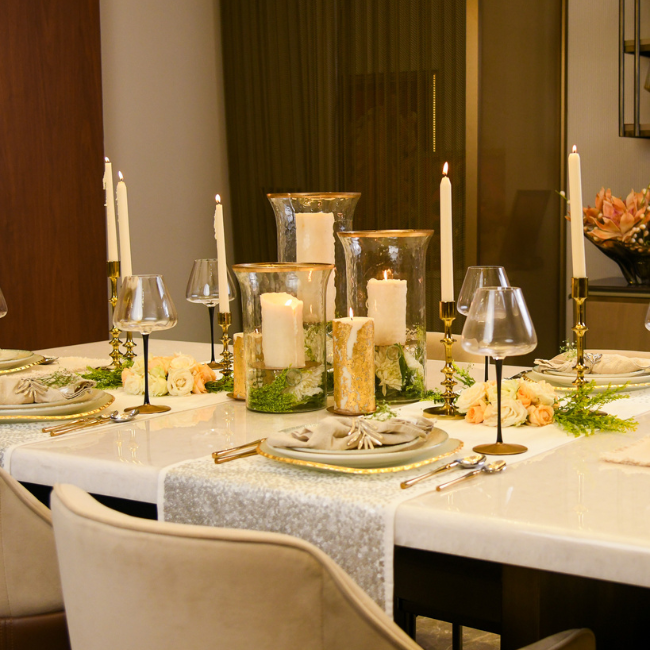
Dining table or hosting context: When you are burning a candle as part of a hosting setup, you are trying to establish an atmosphere across the table and the connected space. A 350 gram candle or the 3-wick format will carry a room more reliably during a dinner than a smaller single-wick candle that will be overpowered by food smells.
A practical rule of thumb: If you are in doubt between two sizes, go larger. An oversized candle in a small room is not a problem. An undersized candle in a large room is what creates the experience of "it burns but the room doesn't smell like anything," which is the primary disappointment buyers describe. More wax means more fragrance, longer burn, and a more forgiving experience if your space is open or ventilated.
What 3-wick candles actually do: Multiple wicks burning simultaneously produce more heat across a wider melt pool. This means fragrance releases faster and more broadly than a single-wick candle of similar weight. A 3-wick candle is not just bigger than a single-wick candle. It distributes fragrance differently. For large living rooms, open-plan spaces, or for people who want the room to smell intentional within ten minutes of lighting rather than thirty, the 3-wick format is worth the premium.
The room guidance above is general rather than prescriptive because Indian homes vary considerably in layout, ceiling height, ventilation, and air conditioning. A 220 gram candle in a flat in a Mumbai high-rise with sealed double-glazed windows and central AC will behave differently than the same candle in an older bungalow in Chennai with cross-ventilation and a cooking area that opens into the living room. These are the real conditions that determine candle performance, and no guide can account for every variation. The sizing framework above gives you a reliable starting point.
The First Burn Ritual (Why Most People Ruin Their Candle in the First Session)
Of all the candle knowledge in this guide, the section you are about to read will have the most direct impact on your actual experience with every scented candle you buy from this point forward.
There is one mistake that ruins scented candles permanently and it happens on the very first burn. It is called tunnelling, and it is almost entirely preventable if you know what to do.
When you light a candle for the first time, the wax directly around the wick begins to melt. The heat radiates outward from the flame. If you extinguish the candle before the melt pool has reached all the way to the edges of the jar, the wax memory sets. Wax has memory in the sense that it tends to melt in the same pattern in subsequent burns as it did in the first one. If you blow out a candle after twenty minutes on the first burn and the melt pool only reached halfway to the sides, the candle will continue to melt in that same half-width tunnel in every future burn, leaving a column of intact wax around the sides that will never burn and never release its fragrance.
A tunnelled candle is not recoverable in most cases. You have permanently wasted a significant portion of the wax, the fragrance in that wax, and the money you paid for the candle.
The first burn ritual is simple: on the very first time you light a new scented candle, you must let it burn until the entire top surface of the wax has melted from edge to edge. This is called achieving a full melt pool. Depending on the diameter of the candle, this takes between two and four hours for most jar candles.
If your schedule does not allow a two to four hour first burn window, wait until it does. Lighting a candle and blowing it out after an hour on the first burn is one of the most common and most costly mistakes in candle use. The candle will tunnel. The throw will diminish over time because the fragrance in the tunnelled wax walls will never reach heat. You will blame the candle when the fault is in the ritual.
For subsequent burns, the same principle applies with less strictness. You do not always need a full melt pool on every burn, but you should aim for one whenever possible and you should never let a burn go for less than one hour, as a short burn creates an incomplete melt pool that can re-establish the tunnel pattern.
The second element of the burn ritual is wick trimming. Before every burn session, not just the first, trim the wick to approximately 6 millimetres. Wick length directly affects flame height and the quality of the burn. An untrimmed wick that has grown from the previous burn will produce a larger, hotter flame that creates uneven melting, more soot, and can cause the wax to consume unevenly. A trimmed wick at 6mm produces a controlled flame that melts the wax evenly and releases fragrance at the right rate.
Wick trimming is not optional care advice. It is the difference between a clean, even-burning candle that looks and performs well across its entire life and one that develops black sooting on the glass, a misshapen flame, and inconsistent throw.
The full set of ongoing candle care practices, including how to rescue a candle that has started to tunnel and how to maximise the life of your wax, is covered in our candle care 101 guide.
Burn Time Reality Check - What the Numbers Actually Mean
Burn time is the number that generates more scepticism among Indian candle buyers than almost any other spec. Reviews routinely report that candles burned far shorter than their stated hours. The reasons for this gap are real, and understanding them changes how you interpret burn time claims.
Here is what the actual burn times look like for a well-made soy-based candle at standard Indian use:
- 100 gram candle: up to 18 hours
- 220 gram candle: up to 36 hours
- 350 gram candle: up to 45 hours
- 250 gram 3-wick candle: burn hours vary with the wider melt pool, which trades total hours for faster, broader fragrance release
These numbers assume you are burning the candle for two to four hour sessions and following the wick trimming and first burn guidelines above. If you burn a candle for one hour sessions, extinguishing before the melt pool fully forms, you will get fewer effective hours than the spec suggests. If you burn a candle continuously for eight or ten hours in a single session, you will accelerate wax consumption beyond the optimal rate and reduce your total burn hours.
The first burn also affects total burn time indirectly. A candle that tunnels on the first burn will appear to have a shorter burn time because the wax on the sides of the jar never melts and never contributes to the scent experience, even though it is technically still present. Buyers who measure burn time on a tunnelled candle are measuring the burn time of the column of wax that actually melted, not the total wax in the jar.
Fragrance load also has a secondary effect on perceived burn time. A high-fragrance-load candle often smells strong until the very last burn, because fragrance is distributed through the full depth of the wax rather than concentrated near the surface. A low-fragrance-load candle can smell reasonably strong early on and then become progressively weaker over subsequent burns, creating the impression of a candle that faded or ran out of scent even while wax remains.
The value calculation many Indian buyers make in their heads is: price divided by burn hours equals cost per hour. This is a reasonable frame. A 220 gram candle with up to 36 hours of burn time costs considerably less per hour than it might first appear. That same candle burned in three or four 10-hour sessions without wick trimming and with tunnelling on the first burn might give you 20 effective hours, at which point the per-hour cost nearly doubles.
Candle care is not a premium habit or a fussy precaution. It is what determines whether the burn time spec the brand advertised is the burn time you actually receive.
Scented Candles as Gifts: How to Choose for Someone Else
Scented candles are one of the most purchased premium gifts in India, particularly around Diwali, for housewarmings, and for weddings. The gifting intent introduces a specific challenge: you are choosing a fragrance for a home you do not live in, for sensory preferences you may not fully know.
This section addresses how to think through that choice without guesswork.
The safest gifting fragrance profiles. Gifting scent is different from choosing scent for yourself. When you shop for your own home, you know whether you prefer floral, woody, citrus, or incense-forward fragrances. When you gift, you are making an educated guess. In general, clean, layered floral or warm woody profiles are the most broadly appealing and the least polarising. Very strong oud or heavy incense profiles can feel overwhelming in homes that are not used to them. Very light, sheer profiles may register as underwhelming when the recipient opens the gift. The middle ground of complex florals, warm woods, or citrus-spice combinations tends to land well across a range of homes and preferences.
Match the candle size to the gift occasion. For a housewarming gift, a 350 gram or 3-wick candle makes sense because you are giving the recipient something that will be present in their new home for months and will have real impact in a living room or open space. For a birthday or personal gift, a 100 or 220 gram candle sits in the right pricing register and feels personal without being overwhelming.
A candle is a two-part gift: the fragrance and the object. The vessel is part of what the recipient experiences. A candle in a well-designed jar that sits beautifully on a shelf or coffee table becomes a decorative object between burns. When the wax is finished, a well-made jar continues to have a life. This matters in gifting because the visual first impression when the gift is opened is part of the gift.
Consider the home's existing scent environment. If you know the recipient burns incense regularly, a lighter, more delicate fragrance may feel thin against the ambient incense notes in their home. A candle with more presence will perform better. If the recipient lives in a flat with minimal ventilation and strong cooking smells, the same principle applies: a candle with higher fragrance load will be noticeable, a delicate one may not register.
The candle + diffuser combination as a gift. For a home fragrance gift that covers multiple dimensions, a candle paired with a reed diffuser in the same fragrance collection is a thoughtful choice. The reed diffuser provides continuous, ambient fragrance. The candle is for intentional, occasion-led burning. Together they create a consistent scent signature for the recipient's home in a way that a single product cannot.
If you are specifically looking for guidance on choosing scented candles as gifts for Indian celebrations across different occasions and price points, the full breakdown is in our candle gift guide.
The RAD LVNG Candle Range: A Buyer's Map
RAD LVNG candles are made with imported certified natural soy wax, selected for clean burn and consistent fragrance throw. Cotton wicks are used across all formats. The fragrance load is about 1.5x that of standard market candles, which places every candle in the range at or above what the category at large would consider the high end. Each candle is cured for four to seven days before shipping, which is why the fragrance throw is consistent from the first burn through to the last.
The range spans five distinct worlds, each with its own visual identity, fragrance logic, and buyer.
Home Fragrance Collection Candles. Twelve named fragrance collections, each with a distinct scent world and a narrative identity. These candles are collection-led: the story, the name, and the scent work together as one thing. Collections span the Luxe tier, which includes names like Way Back Home, The Room No. 11, Arthbound, The Botanist's Secret, The Forgetful Florist, and The Tangerine Thief, and the Core tier, which includes Raat Bloom, Oud-Kissed Rose, Chapter Rose, Lavender Haze, Meher Bagh, and Temple Petals. These candles are the home fragrance anchor of the RAD LVNG range, designed for living rooms, bedrooms, and the kind of consistent, repeated scenting that makes a home smell like itself.
A practical advantage of this collection architecture: each fragrance collection runs across reed diffusers, mood sticks, and candles simultaneously. If you are unsure whether a fragrance works in your home, you can try it as a reed diffuser or a set of mood sticks before committing to a large candle. This is a trial path that very few Indian candle brands offer.
Signature Candles. The personality-driven, name-led series that built the RAD LVNG following. These candles carry names that say something: the FLY Series with 26 numbered scent profiles, the Flames Series for the emotionally charged moments, Truth Bombs for the relatable and the wry, and the Personality collection for the kind of names that people buy because they describe themselves or someone they know. Candle Cafe occupies its own world within this: every candle in the Cafe range is an ode to a specific coffee shop order, from Cold Brew to Iced Matcha Latte to Espresso Mocchiato.
These are table objects as much as they are fragrance objects. They sit on a desk or a counter and say something about the person who chose them. The scent is the experience; the name is the invitation to pick it up.
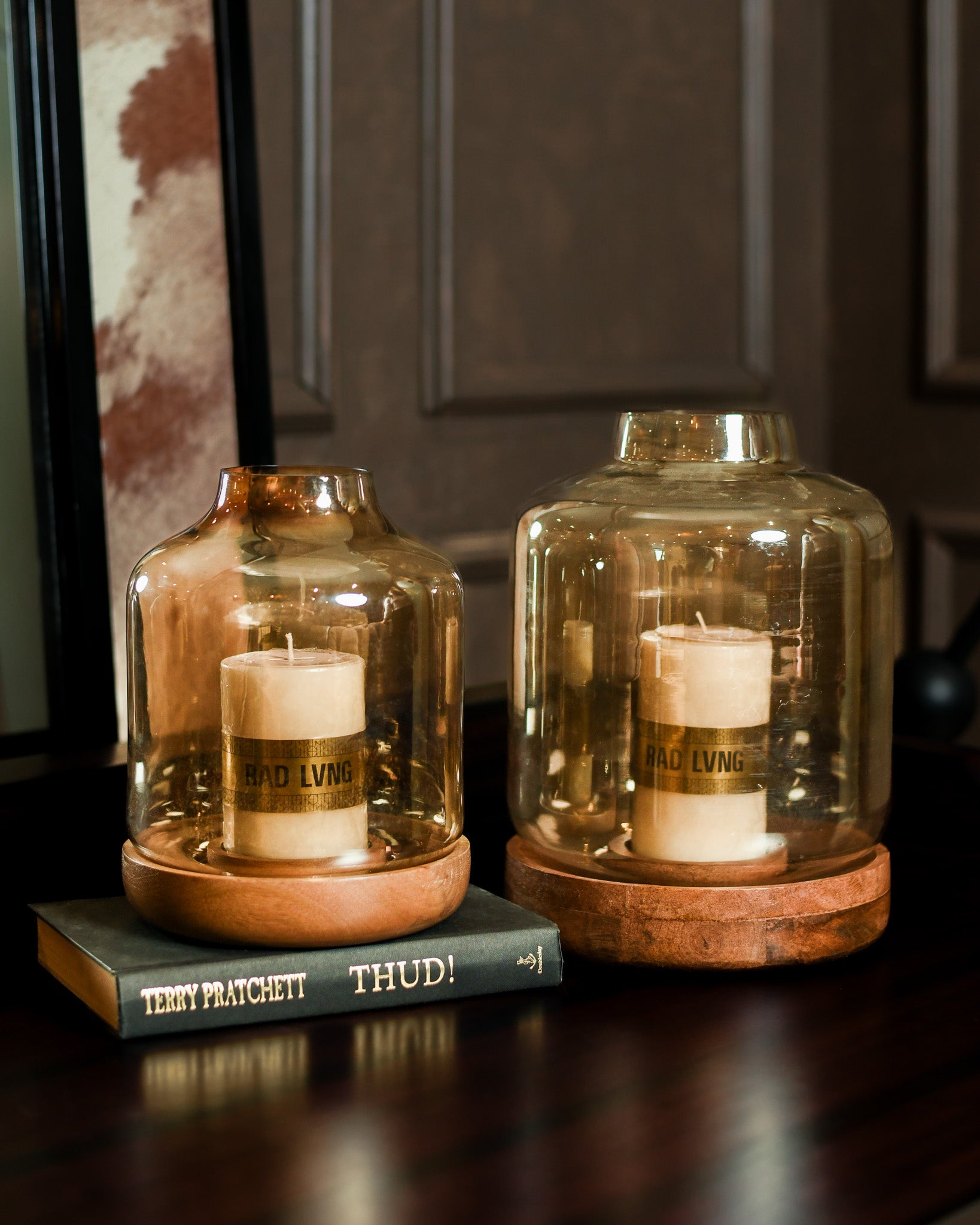
Decorative Candles. Candles where the vessel and the form are the primary statement. The Rani Pink world, the Chandni Mirror Mosaic, the Urli Candles, the Illuminate series. These are for homes where the visual intention of a shelf or table matters as much as the fragrance. They are lit and they burn, but between burns they occupy a space as design objects. These candles are also strong gifting choices because their visual drama is immediately apparent at the moment of unwrapping.
Pillar Candles and Candlesticks. Standalone wax forms without a container. The virtue series, the Twirl and Swirl candlestick sets, the Guidance Candlesticks, and sculptural forms. These pair with candle holders and stands to create a complete table or corner composition. They are for homes that want the visual of a lit flame without a jar, and for tables that need height, colour, and form as much as they need fragrance.
Large Format Candles. The 1.5kg, 3.5kg, and 7.5kg formats in select Home Fragrance collections are a different purchase entirely: they are for homes that want a room centrepiece, for offices and commercial spaces, and for the category of large gifting that needs to make a visual and olfactory statement simultaneously. The 7.5kg Way Back Home candle at one end of the range sits as far from a 100-gram trial candle as it is possible to get while still being the same product in the same category.
Browse the full range at shop scented candles.
Frequently Asked Questions
What is the ideal fragrance load for a scented candle in an Indian home?
Look for 8% or above. Standard Indian homes with ventilation, cooking smells, or incense in the air need a candle with enough fragrance concentration to fill the room and hold its presence against competing ambient smells. Candles below 7% fragrance load consistently underperform in these conditions. Candles at 9 to 11% are the range where most buyers in India will reliably notice the scent throughout the room.
Does soy wax really matter, or is it just marketing?
Soy wax is genuinely better in specific ways: cleaner burn, less soot, renewable source, and a gentler fragrance release due to a lower melt point. These are real differences, not marketing. The important caveat is that soy wax alone does not make a candle smell stronger. A soy candle at 6% fragrance load will still have weak throw. Wax type is the quality floor; fragrance load determines the ceiling.
How long should I burn a candle on the first session?
Until the melt pool reaches the full edge of the jar, not until a timer runs out. This takes between two and four hours depending on the diameter of the jar. If your schedule does not allow that window, wait until it does. The first burn is the most important session in the life of the candle. An incomplete first melt pool sets the wax memory and creates a tunnel that is nearly impossible to fix later.
Does trimming the wick actually make a difference?
Yes, meaningfully. An untrimmed wick creates a larger, more volatile flame that produces uneven melting, more soot on the glass, and inconsistent fragrance throw. Trimming to 6mm before every burn gives the flame a clean, controlled profile. It takes ten seconds. The difference in burn quality across the life of the candle is substantial.
Why does my candle smell great in the store but not at home?
Retail environments and candle stores are often small, enclosed, and contain multiple lit or recently lit candles that saturate the air with fragrance. The cold throw of a candle, how it smells when you put your face near the unlit wax, can also be misleadingly strong even when the hot throw in a real room is weak. The only reliable test for hot throw is lighting the candle in your actual home for a full first burn session.
Are soy wax candles safe to burn around children and pets?
This guide does not make medical or safety certifications. In general, burning any candle in a well-ventilated room, keeping it away from reach of children and pets, and ensuring the wick is trimmed to manage soot are the baseline precautions. If you have specific health concerns, consult with a medical professional rather than relying on candle brand claims.
How do I know what candle size is right for my room?
The general guidance is: 65 to 100 grams for small enclosed spaces like washrooms, 220 grams for bedrooms and smaller living rooms, 350 grams for medium to large living rooms, and the 3-wick 250 gram format for large or open-plan spaces where single-wick performance tends to feel thin. When in doubt, go larger. An oversized candle in a small room is pleasant. An undersized candle in a large room is the setup for the "this doesn't smell like anything" experience.
What does tunnelling mean and how do I prevent it?
Tunnelling is what happens when a candle develops a channel down the centre rather than melting evenly to the edges. It is caused by extinguishing the candle before the melt pool reaches the jar walls, which sets the wax memory in a narrow ring. Once tunnelled, the candle burns through the centre and the wax on the sides never reaches heat, never releases fragrance, and is effectively wasted. Prevention is straightforward: on the first burn, do not extinguish until the full surface is liquid. On subsequent burns, try to achieve a full melt pool when your schedule allows.
Is the 3-wick candle format worth the higher price?
For large rooms, open-plan spaces, or if you want fragrance to be noticeable quickly after lighting, yes. Multiple wicks burning simultaneously create a wider, hotter melt pool that releases fragrance across a larger surface area. A 3-wick candle does not smell "three times as strong" as a single-wick candle, but it distributes fragrance more broadly and more quickly, which is what matters in a large room. The 250 gram 3-wick format is also a strong value proposition per burn hour.
How do I layer fragrance across my home using candles and other formats?
The most straightforward approach is to use the same fragrance collection across multiple formats. A reed diffuser in the entrance or hallway provides continuous ambient fragrance. A candle in the living room or bedroom provides the intentional, occasion-led experience. Mood sticks in a specific room add a third dimension. When all three come from the same collection, the scent signature is consistent across the home without being redundant. Each format releases fragrance differently and occupies a different place in the rhythm of daily home life.
What should I look for when buying a scented candle as a gift?
Three things in order: the fragrance profile (choose something broadly appealing rather than highly personal), the candle size relative to the occasion (larger for housewarmings, medium for personal gifts), and the visual quality of the jar and packaging. A premium candle gift should look like a premium gift at the moment of unwrapping. The second impression is how it smells in the recipient's home. Both need to work.
Why do some Indian candle brands sell candles at heavy discounts from an MRP that is much higher?
This is a common practice in the category where brands set a high MRP and then sell at 40 to 60% off perpetually, which means the "original price" was never the real price. This practice creates confusion about what the candle is actually worth and erodes trust in pricing across the category. A brand that sells at consistent, honest prices is generally one that is more confident in its product and less reliant on the psychological effect of a crossed-out MRP. Judge a candle by what you actually pay for it and what you get at that price, not by how far it has been marked down from a number that may have been set only to be discounted.
Can scented candles compete with incense or agarbatti in an Indian home?
They are different fragrance experiences and they are not competing in the way the question implies. Incense produces an immediate, powerful, vertical plume of scent that fills a room within seconds and then dissipates within minutes. A scented candle produces a slower, sustained, lateral diffusion of fragrance that builds over twenty to thirty minutes and then holds. For homes that want ambient, continuous scent over an evening, a candle is the better format. For a quick hit of fragrance before a guest arrives or as part of a ritual moment, incense serves a different function. Most Indian homes can and do use both for different purposes and different times of day.
For more on getting the most from your scented candle, see the candle care 101 guide.
To browse the full RAD LVNG scented candle range, visit shop scented candles.


