





The Truth About Naphthalene Balls - And 3 Things to Use Instead
Every Indian household has them. The white balls tucked into the corner of the almirah, the smell that clings to clothes retrieved from summer storage, the ritual nobody questioned because the generation before never questioned it either. Naphthalene balls are one of those domestic fixtures that arrived before most people now alive were born, and have stayed on the assumption that familiarity equals safety.
The question this post sets out to answer directly is: are naphthalene balls safe in India?
The short answer is no, not in the way most households use them, and the risk is higher here than in many other countries for reasons that are specific to Indian population genetics. Naphthalene is classified as a possible human carcinogen by the world's leading cancer research authority. More immediately, it is a documented trigger for a dangerous blood condition in a significant portion of the Indian population, particularly in infants. And the smell it leaves in your clothes is, frankly, the least of the problems.
There are better options. Three of them, to be specific. They work, they smell far better, and none of them come with a carcinogen classification. This post covers all of it: what naphthalene actually is, the health case against it, and the three alternatives worth using instead, with an honest assessment of what each one does and does not do well.
What Naphthalene Balls Actually Are
Naphthalene is a white crystalline organic compound with the chemical formula C₂₀H₈. It was originally derived from coal tar as a byproduct of coal gasification, which is why older references sometimes call it tar camphor. Modern production is primarily from petroleum refining, where naphthalene is extracted as a fraction during the processing of crude oil.
The reason it ends up in wardrobes is a physical property: at room temperature, naphthalene sublimates. It converts directly from solid to vapour without passing through a liquid stage. The vapour disperses through an enclosed space, and moths, carpet beetles, and silverfish find it inhospitable. The insect deterrence is real. Naphthalene does work as a pesticide in enclosed spaces.
The balls sold in Indian markets under names like camphor balls, mothballs, or simply naphthalene balls are typically compressed naphthalene with a stabiliser. Some products contain paradichlorobenzene (PDB) instead of naphthalene, and the two should not be mixed in the same wardrobe as they can react. If you are not sure which type you have been using, the smell is the tell: naphthalene has a sharp, tarry, petroleum-adjacent odour. PDB smells more like a public toilet disinfectant. Neither is pleasant. Neither is harmless.
The practical question is not whether naphthalene works. It is whether the tradeoff is acceptable when safer alternatives exist that cover the same function.
The Health Case Against Naphthalene Balls
There are two distinct categories of health concern with naphthalene in home use. The first is chronic exposure risk. The second is an acute risk that is specific to a substantial proportion of the Indian population. Both are worth understanding clearly, without alarmism, because the science is specific.
The IARC Classification: What It Means and What It Does Not
The International Agency for Research on Cancer (IARC), the cancer research arm of the World Health Organisation, classifies naphthalene as Group 2B: possibly carcinogenic to humans. This classification is based on two bodies of evidence: sufficient evidence of carcinogenicity in animal studies, specifically nasal tumours in rats at high exposure levels, and limited evidence in human studies, primarily occupational cohorts with elevated lymphoma risk among workers with sustained naphthalene exposure.
Group 2B is not the same as Group 1, which contains known human carcinogens like asbestos, tobacco smoke, and processed meat. It is also not the same as Group 2A, which contains probable human carcinogens like red meat and night-shift work. Group 2B means the evidence is suggestive enough to warrant classification, but not yet conclusive for cancer risk in humans at typical exposure levels.
For perspective on how the IARC uses this classification: coffee was in Group 2B until 2016, when the evidence shifted. Pickled vegetables are in Group 2B. The classification is not a verdict of definite danger. It is a formal signal that the substance is not something to treat as inert.
What the classification does mean for home use is this: chronic low-level vapour inhalation from naphthalene stored in enclosed spaces, particularly in bedrooms or small almirahs with limited ventilation, is not a zero-risk activity. The assumption that something used for generations is therefore safe has no scientific basis. Many substances used for generations turned out not to be safe. The IARC classification exists precisely because the evidence accumulated to a point where that assumption could no longer be made for naphthalene.
If you want a deeper look at the toxicology, we have written a full guide to naphthalene toxicity that covers the mechanisms in more detail.
The G6PD Problem: The Risk That Is Specific to India
This is the more urgent health concern, and it is the one most Indian households are unaware of.
G6PD deficiency (glucose-6-phosphate dehydrogenase deficiency) is the most common enzyme deficiency in the world, affecting an estimated 400 million people globally. In India, prevalence estimates are substantial: approximately 2% in some northern populations, rising to 15 to 27% in certain tribal and South Indian populations. It is a genetic condition that is X-linked, meaning it disproportionately affects males, though females can also be affected.
G6PD deficiency impairs the red blood cell's ability to defend itself against oxidative stress. Under normal conditions, this creates no symptoms. Most people with G6PD deficiency live their entire lives without knowing they have it. The deficiency becomes dangerous when the person is exposed to an oxidative stressor: certain medications, certain foods (fava beans are the classic example), and certain chemicals.
Naphthalene is an oxidative stressor. In individuals with G6PD deficiency, naphthalene exposure can trigger acute haemolytic anaemia: the sudden, rapid destruction of red blood cells. This is a medical emergency. In severe cases, it can be fatal. The population most at risk is newborns and infants, because their enzymatic protective systems are not yet fully developed even in individuals without G6PD deficiency, and their relative exposure to naphthalene vapour is higher given their smaller body mass.
Cases of naphthalene-induced neonatal haemolytic anaemia are documented in Indian paediatric literature. The pattern is consistent: baby clothes stored with naphthalene, gifted or retrieved without adequate airing, dressed on a newborn or infant. The families involved typically had no idea that G6PD deficiency was present, because it had never been triggered before. The clothes smelled fine after airing. The problem was residual vapour absorbed into the fabric.
The practical consequence: if you do not know whether household members have G6PD deficiency (and statistically, in an Indian household, there is a meaningful probability that someone does), using naphthalene on clothing worn by infants or young children is a risk that cannot be fully mitigated by airing alone.
What Naphthalene Does to Your Clothes
The chemical concerns aside, naphthalene causes specific problems for the garments themselves.
The odour is persistent and transfers. Naphthalene vapour is absorbed into fabric fibres, and the smell can survive multiple washes, particularly in protein fibres like silk, wool, and cashmere. It transfers to other garments stored in proximity. A silk sari stored near naphthalene balls will smell of naphthalene when retrieved, and that odour is difficult to remove fully. For garments with sentimental or monetary value, this is a real and often irreversible problem.
Prolonged naphthalene vapour exposure has also been associated with subtle colour changes in some synthetic dyes used in traditional Indian textiles. This is not universal and depends on dye chemistry, but it is a documented risk with long-term storage.
The irony is not lost: naphthalene is used to protect valued textiles, but it can itself cause damage to the textiles it is protecting.
3 Things to Use Instead
The alternatives below are not compromises. They are, in most respects, better than naphthalene. Each has specific strengths and honest limitations.
1. Fragrance Tablets
Best for: Scent, safety, and premium textile storage.
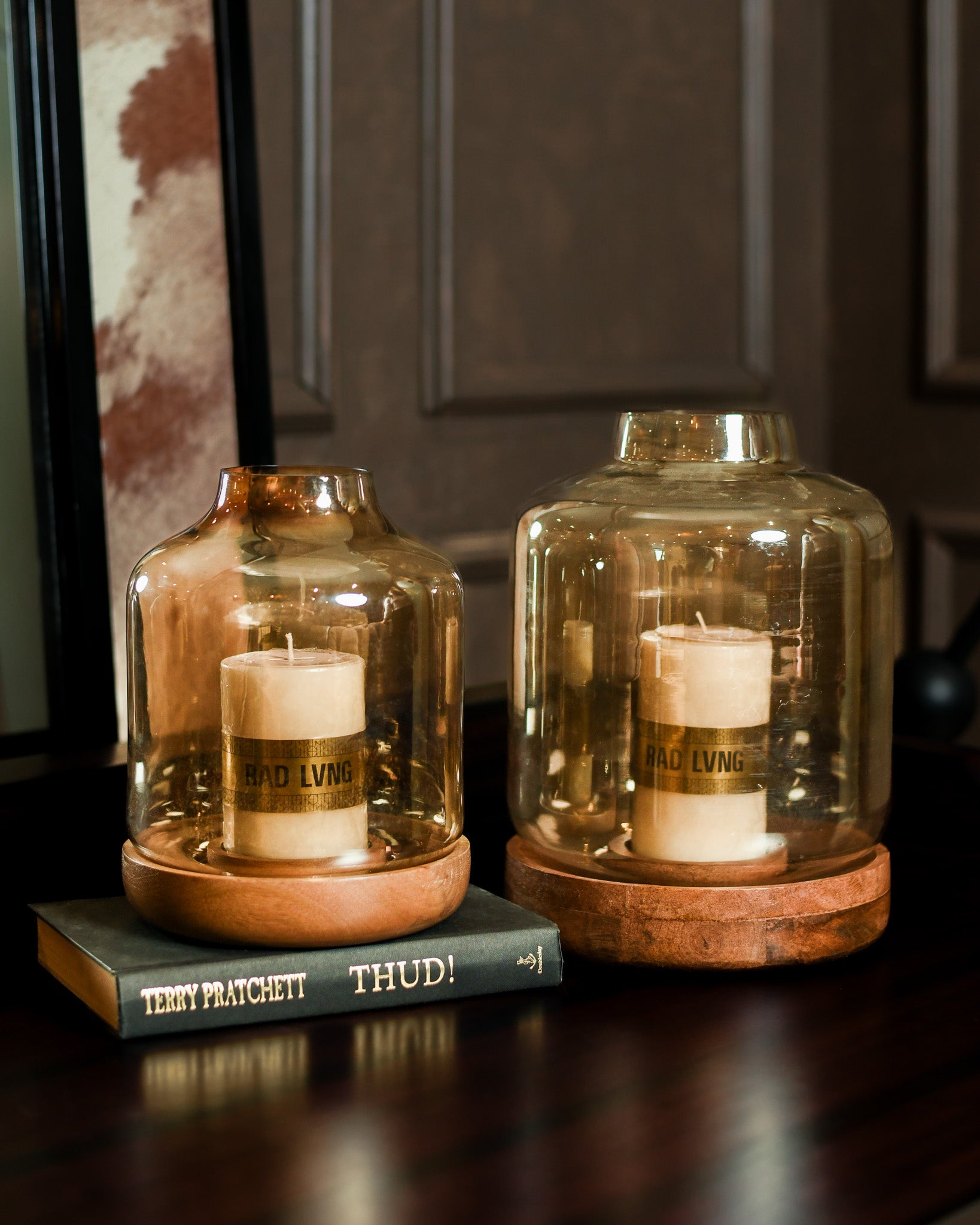
Solid wax tablets scented with essential oils are the most direct upgrade for anyone who wants their wardrobe to smell beautiful rather than chemical. RAD LVNG's fragrance tablets are made with beeswax or soy wax as a carrier and use fragrance compositions that release slowly into the enclosed wardrobe space over time, rather than a sharp initial hit that fades.
The practical experience is noticeably different from naphthalene. Open your wardrobe and the clothes smell of fragrance, not storage. They transfer a faint, clean scent to garments. There is no chemical residue on the fabric, no toxicity risk, and no interaction with dyes or fibres.
What fragrance tablets do well:
- Release pleasant, consistent scent into the wardrobe over several weeks to months depending on storage conditions
- Safe for all textile types, including delicate silks, cashmere, and embroidered garments
- No known health risks
- No odour transfer to garments (the scent is light and clean, not absorbed)
- Suitable for garments worn by or near infants
Honest limitation: Fragrance tablets do not have meaningful insect-deterrent properties on their own. For pest protection in wardrobes containing wool, cashmere, or natural fibres that moths target, combine them with cedar (below). The cedar handles the deterrence; the fragrance tablets handle the scent. Together, they cover everything naphthalene was doing, better.
For a deeper look at building a wardrobe that smells genuinely good, our fragrant wardrobe guide covers the full approach.
2. Cedar Blocks or Cedar Hangers
Best for: Moth and pest deterrence, particularly in wardrobes with natural fibres.
Cedarwood contains a group of natural aromatic compounds called sesquiterpenes, specifically thujopsene, cedrol, and widdrol among others. These compounds create an environment that clothes moths, carpet beetles, and other fabric pests find actively inhospitable. Cedar does not kill adult moths, but it is effective at deterring egg-laying, which is where the actual damage to textiles occurs.
Cedar's effectiveness is genuine and well-documented. It has been used for textile storage in many cultures across centuries, which is why traditional cedar chests and cedar-lined wardrobes exist. The science behind it is the same as naphthalene's mechanism: volatile aromatic compounds dispersed in an enclosed space. The difference is that cedarwood's compounds are not classified as carcinogens and carry no known systemic health risk.
What cedar does well:
- Genuine moth and beetle deterrence through aromatic compounds
- No known health risks
- Pleasant, clean smell that does not transfer unpleasantly to clothes
- Long-lasting: a cedar block lasts years and can be refreshed by lightly sanding the surface to expose fresh wood, which releases a new wave of aromatic compounds
- Works as hanging cedar rings, flat cedar blocks, or cedar sachets depending on wardrobe configuration
Honest limitation: Cedar effectiveness decreases over time as the volatile aromatic compounds off-gas. A cedar block that has been sitting in a wardrobe for two or three years without being sanded is not providing meaningful deterrence. Periodic refreshing (a light sand every six to twelve months) is required to maintain effectiveness. Cedar also does not provide fragrance in the way that fragrance tablets do. It smells of cedar, which is pleasant, but is not a substitute for a considered wardrobe fragrance.
The practical approach: cedar blocks or cedar hangers for deterrence, fragrance tablets for scent. The two are complementary and together replace everything naphthalene was doing.
3. Dried Neem or Herbal Sachets
Best for: Traditional households, heirloom textiles, and anyone who prefers a fully plant-based approach.
Neem has been used in Indian textile storage for centuries. This is not folk superstition. Neem contains a complex of natural compounds, most notably azadirachtin, that have well-documented insect-repellent and insect-growth-disrupting properties. The compound has been studied extensively and is used in organic agriculture as a biopesticide.
Dried neem leaves in a muslin sachet, placed in a wardrobe or folded into stored textiles, release these compounds slowly. The sachets should be replaced seasonally, roughly every three to four months, as the active compounds dissipate. Fresh neem leaves dried in shade are the most potent; commercially available dried neem sachets also work if sourced from a supplier who stores them properly (light and heat degrade azadirachtin).
Beyond neem, several other plant materials used in Indian and broader textile storage traditions have documented deterrent properties:
- Dried cloves contain eugenol, which is a proven insect deterrent and has mild antifungal properties useful in humid climates. A small cloth bag of whole cloves placed in a wardrobe is effective and smells warm and pleasant.
- Dried lavender is extensively used in European textile storage and has documented repellent effects on clothes moths. The scent is strong initially and mellows over time. Lavender sachets placed among stored garments are particularly effective for woolens.
- Dried vetiver root (khus) is used in South Indian textile storage traditions and is specifically suited to the Indian climate. Vetiver has natural insect-repellent properties and the earthy, woody scent that is familiar from traditional Indian homes. It also absorbs moisture to some degree, which is useful in humid storage conditions.
What herbal sachets do well:
- Completely plant-based, no synthetic chemicals
- Appropriate for storage of heirloom textiles where chemical exposure of any kind is a concern
- Can be composted when spent
- Culturally appropriate and familiar approach for traditional Indian households
- Effective deterrence when kept fresh
Honest limitation: Herbal sachets require more active maintenance than cedar. They need to be replaced seasonally rather than just periodically refreshed. Their effectiveness also varies more than cedar depending on how fresh the material is. For maximum protection of high-value textiles, combine with cedar rather than relying on herbal sachets alone.
Frequently Asked Questions
Are naphthalene balls really dangerous, or is this overstated?
The risk is real but proportionate. Occasional or minimal use is unlikely to cause acute harm in most adults. The danger is higher in specific circumstances: infants and young children in enclosed spaces with naphthalene vapour, individuals with G6PD deficiency (a significant proportion of the Indian population), and prolonged daily exposure from wardrobes in sleeping spaces. The IARC Group 2B classification is not a verdict of certain cancer risk, but it does mean that treating naphthalene as harmless because it is familiar is not scientifically supportable. Given that effective alternatives exist, the calculation for most households is straightforward.
Can I just air out naphthalene-treated clothes and use them safely?
Airing reduces the odour and some of the vapour absorbed into fabric. It does not eliminate it. Studies on naphthalene-treated clothing show measurable residual naphthalene in fabric after airing periods. For most adults wearing the garment, this level of residual exposure is probably low-risk. For infants, for individuals with G6PD deficiency, and for daily-wear garments that will be worn close to the body for extended periods, the residual risk after airing is not zero. The honest answer is that airing is better than nothing and not the same as safe.
What is the best naphthalene balls alternative for wool and cashmere?
Cedar is the most effective direct substitute for moth deterrence in wardrobes with natural protein fibres like wool and cashmere. Cedar blocks or cedar hangers placed throughout the wardrobe provide the insect-deterrent function without the health risks of naphthalene. For added protection, combine with dried lavender sachets or dried neem. Add fragrance tablets to the same wardrobe for scent. This three-element combination covers the full range of what naphthalene was doing, and does it better on every dimension except price, where naphthalene's only real advantage is that it costs almost nothing.
Are mothballs in India different from those sold in other countries?
Naphthalene-based mothballs are less common in Western markets than they were a generation ago, partly because of the health concerns and partly because paradichlorobenzene (PDB) became the dominant formulation in many countries. In India, naphthalene remains the primary active ingredient in most mothball products sold in general retail. Some premium products use PDB instead, which has a different (and arguably worse) toxicity profile, and which should not be used in the same wardrobe as naphthalene. Neither naphthalene nor PDB is a genuinely good choice for household textile storage. The alternatives above apply equally regardless of which formulation you have been using.
Making the Switch: A Practical Sequence
Removing naphthalene from a household that has been using it for years is straightforward but requires a specific sequence to avoid residual problems.
First, remove all naphthalene balls from every wardrobe, storage trunk, and almirah. Do not leave any behind on the assumption that a few remaining balls are harmless. Leaving them in place means continuing to off-gas vapour into the space and into fabrics.
Second, air the wardrobes themselves. Leave doors open for at least 24 to 48 hours. If the wardrobe has a persistent naphthalene odour in the wood itself, wiping down interior surfaces with a dilute white vinegar solution (one part vinegar to two parts water) can help neutralise residual odour.
Third, air all stored garments. Hang them outdoors or in a well-ventilated room for at least 24 hours. For garments with a particularly strong naphthalene odour, a wash before storage is advisable. For garments that cannot be washed (embroidered silks, certain woollens), extended airing over several days is the most effective approach.
Fourth, introduce the alternatives. Cedar blocks or cedar hangers throughout the wardrobe for pest deterrence. RAD LVNG fragrance tablets for a consistent, clean scent. Herbal sachets (neem, cloves, or lavender depending on preference) folded into stored winter garments for additional protection.
The practical transition takes one afternoon for the wardrobe work and a few days for airing the garments. The result is a wardrobe that smells genuinely pleasant, protects textiles without health trade-offs, and does not pose a risk to infants or family members with undiagnosed G6PD deficiency.
One note on the transition: the smell of a cedar-and-fragrance-tablet wardrobe is noticeably different from what you may be used to. Better, but different. Give it two to three weeks before forming a final view. The absence of the sharp naphthalene undertone in your clothes is something most people find immediately appealing. The fragrance from the tablets takes a few days to fully permeate the wardrobe space.
The Broader Point
Naphthalene's grip on the Indian household has less to do with it being the best option and more to do with inertia. It was the first effective industrial solution to a real problem, it was cheap, and it became a habit before the health data existed. The habit has outlasted the logic.
The alternatives above are not new discoveries. Cedar has been used for textile storage for thousands of years. Neem has been used in India specifically for a very long time. What is newer is the availability of well-made fragrance tablets designed for wardrobes, which add the scent dimension that naphthalene never provided well.
The argument for switching is not that naphthalene will definitely harm you. It is that you can get everything naphthalene provides, without any of the health concerns, and with clothes that smell far better. That is not a difficult case to make.
If you are ready to make the switch, start with the fragrance tablets and a set of cedar blocks. Your wardrobe will tell you within a week why you did not do it sooner.


