



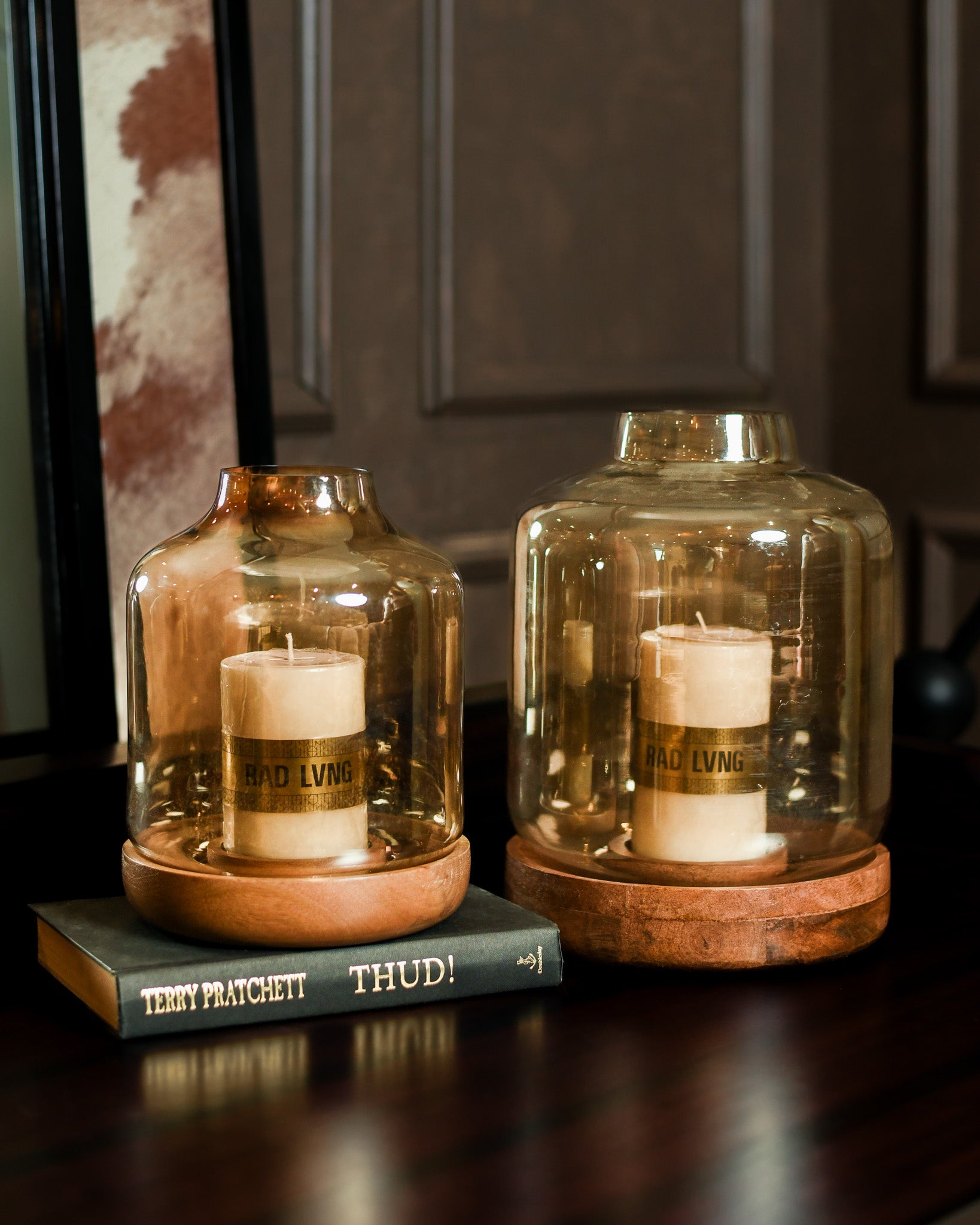


The Art of the Fragrant Wardrobe: How to Make Your Clothes Smell Beautiful
Most wardrobes in India smell like one of two things: naphthalene balls or nothing at all. Neither is what you want. A fragrant wardrobe, one where opening the door releases a quiet, considered scent onto your clothes, is not a luxury reserved for boutique hotels or period films. It is a practical thing, and it is achievable with very little effort once you understand why Indian wardrobes have a particular set of challenges that European or American wardrobe guides simply never address.
So: how do you fragrance a wardrobe in India? The short answer is that you replace active, chemical-based repellents with passive, scent-diffusing products designed to work in enclosed, humid spaces. Fragrance tablets are the most practical format for this. They require no heat, no electricity, and no spraying. You place them in drawers, on shelves, and near hanging sections, and they release fragrance slowly over weeks. The result is that your clothes carry a faint, clean scent without direct contact with any product.
But getting there requires understanding a few things: why your wardrobe smells the way it does, what naphthalene is actually doing to your clothes and your health, how passive fragrance diffusion works, and how to place fragrance correctly across the specific layout of an Indian wardrobe. This article covers all of it, in order, with enough detail to actually be useful to someone with a real wardrobe full of cotton kurtas, silk sarees, and synthetic officewear.
Why Indian Wardrobes Have a Fragrance Problem
The fragrance problem in Indian wardrobes is not a matter of cleanliness. It is a matter of climate, construction, and habit, three factors that compound each other in specific ways.
Humidity is the primary driver. India's average relative humidity ranges from 60% in drier northern cities to 85% or higher in coastal and northeastern regions, and these numbers spike dramatically during monsoon months. Wood absorbs moisture. MDF and plywood, the materials most Indian wardrobes are built from, absorb it even faster. When a wardrobe is kept closed for long periods, which most wardrobes are, that moisture has nowhere to go. It settles into the grain of the wood, into the fabric of stored clothes, and into the air pocket that greets you when you open the door. That is the source of the musty smell that returns every year without fail, no matter how often you clean.
Synthetic fabrics make things worse. Polyester, nylon, and poly-cotton blends, which make up a significant portion of most Indian wardrobes, trap body moisture and heat more than natural fibres do. They do not breathe. Stored in a closed wardrobe, they become small reservoirs of retained moisture and residual body odour, neither of which is strong enough to notice on any single garment, but together creates an environment that smells stale.
Then there is naphthalene. Generations of Indian households have used naphthalene balls as the default wardrobe freshener, and while their anti-moth function is real, their fragrance function is not. Naphthalene does not make your wardrobe smell good. It makes it smell chemical, and that chemical smell transfers directly to fabric. Clothes stored near naphthalene balls for extended periods absorb the compound into their fibres. This is not a surface smell that airs out easily. It is an embedded odour that requires repeated washing, sometimes more than once, to fully remove.
Finally, Indian wardrobe design tends to favour enclosed storage: full-length shuttered sections, deep drawers, shelves stacked to the top, and very little circulation. This is practical for a dusty climate, but it creates pockets of stagnant air that amplify every other factor. A western open-plan wardrobe with exposed hanging rails and ventilation gaps has problems of its own, but stagnant air is not among them.
The result is a wardrobe that smells, at best, of nothing, and at worst, of naphthalene, mildew, or the ghost of last monsoon season. Fixing it is not about stronger fragrance. It is about addressing the underlying environment and then introducing scent into a space that has been made receptive to it.
The Naphthalene Problem: What You Are Actually Putting in Your Wardrobe
Naphthalene balls are one of those household staples that most people use because their parents used them, without ever questioning what they are or what they do. The short version is this: naphthalene is a polycyclic aromatic hydrocarbon, a compound that sublimates at room temperature, meaning it transitions directly from solid to gas. That gas is what deters moths and other insects. It is also what you are smelling when you open a wardrobe that uses them.
The International Agency for Research on Cancer (IARC) classifies naphthalene as a possible human carcinogen (Group 2B). Long-term inhalation exposure is associated with respiratory irritation, and in children, exposure has been linked to haemolytic anaemia. These are not alarmist statistics from fringe sources. They are from the same mainstream toxicology literature that guides occupational safety guidelines. The fact that naphthalene has been sold in Indian pharmacies and general stores for decades without significant warning labels is a function of regulatory lag, not safety.
More immediately, naphthalene is a poor wardrobe treatment for fabrics you care about. The compound is lipophilic, meaning it has an affinity for oils and fats. Fabric fibres, especially natural ones like wool, silk, and cotton, provide exactly the kind of surface it binds to. This is why a silk saree stored next to a naphthalene ball for a monsoon season comes out smelling like a chemical plant, and why that smell does not leave after a single wash.
If your reason for using naphthalene is moth protection, you should know that cedar, lavender, and certain herbal sachets are effective moth deterrents with significantly lower risk profiles. And if your reason is fragrance, the irony is that naphthalene actively destroys the fragrance environment of your wardrobe by displacing everything with a single chemical note that is impossible to combine with anything pleasant.
The RAD LVNG position is simple: naphthalene has no place in a wardrobe where you keep things you care about. For more on why naphthalene is harmful and what replaces it effectively, and for a deeper look at practical alternatives to naphthalene balls, the linked pieces go into more detail than this section allows.
How Fragrance Tablets Work
Fragrance tablets are a category of wardrobe fragrance product designed around passive diffusion, the process by which fragrance molecules move from a high-concentration source into the surrounding air without any mechanical or thermal assistance. There is no plug, no heat, no spray, and no aerosol. The tablet sits in your wardrobe and releases fragrance continuously at a slow, controlled rate.
The mechanism depends on the base material. Most quality fragrance tablets use a porous wax or clay matrix as the carrier. Wax-based tablets are formed by blending fragrance oils into a wax compound that is then shaped and cooled. As the wax is porous rather than dense, it allows fragrance molecules to migrate to the surface and evaporate into the air around it. Clay-based tablets work similarly, with fragrance absorbed into the mineral structure of a baked or pressed clay body that releases it over time.
The key advantage of both formats over liquid sprays or gel-based air fresheners is control. A spray delivers fragrance in a single concentrated burst that dissipates quickly and may settle on fabric surfaces. A gel freshener designed for rooms is calibrated for large, open spaces and will over-deliver fragrance in the small enclosed environment of a wardrobe, often to the point where it saturates fabric rather than scenting the air around it. A properly formulated tablet releases fragrance at a rate suited to an enclosed, low-airflow space. You are scenting the air inside the wardrobe, not the fabric itself.
This distinction matters more than it might seem. Fragrance on fabric is a different thing from fragrance in a wardrobe. When you spray fragrance directly onto a garment, you are depositing fragrance compounds onto the surface of the fibre. Depending on the formulation and the fabric, this can leave residue, affect colour, or create uneven scent distribution. When you fragrance the air inside the wardrobe using a tablet, the fabric absorbs a much lighter, more diffuse amount of scent. The result is a barely-there fragrance that you notice when you put the garment on, not a concentrated deposit that announces itself from two metres away.
For the Indian wardrobe context specifically, fragrance tablets also have a practical advantage over sachets: they are more durable in humidity. Fabric sachets filled with dried botanicals or herbal blends tend to absorb moisture from the air, which accelerates the degradation of their fragrance and can introduce a damp, musty note of their own if left in place too long. A wax or clay tablet does not absorb moisture in the same way and maintains its fragrance profile more consistently across seasonal humidity shifts.
The RAD LVNG fragrance tablets are made for exactly this context: Indian wardrobes, Indian humidity, and the specific challenge of wanting your clothes to carry a coherent, gentle scent without any effort on your part beyond placing the tablet and replacing it every few weeks.
Where to Place Fragrance in Your Wardrobe
Placement is where most people go wrong, not because they place tablets in wrong locations, but because they do not think about the wardrobe as a set of distinct zones with different airflow and fabric types. A fragrance tablet sitting at the bottom of a deep hanging section, behind a row of heavy coats, is doing very little. Understanding how scent moves in an enclosed space will help you place it where it actually works.
Fragrance diffuses outward from its source and moves with air currents, however slow they are. In a wardrobe, the only air movement comes from opening and closing the door, and from the small temperature differentials between different sections. Warm air, which is lighter, rises toward the top of the wardrobe. Cooler air settles toward the bottom. This means the fragrance from a tablet placed high in the wardrobe will diffuse more broadly than one placed at floor level.
Hanging sections: Place one tablet near the top of the hanging rod, either resting on a small hook or on the shelf above. This positions the fragrance source in the warmer, more active air zone of the section, and allows it to diffuse downward through hanging garments. For a double-hanging section, one tablet per rail is appropriate. For a single full-length rail with heavy garments, consider two tablets, one near the top and one near the middle.
Drawers: Drawers are the most contained zones in the wardrobe and the most responsive to fragrance tablets. A single tablet placed face-up in a drawer of folded cotton or synthetic clothing will scent the contents gently within a day or two. For larger drawers holding multiple layers of folded fabric, place the tablet on the top layer for maximum contact with the air column inside the drawer.
Shelves: For open shelves holding folded kurtas, jeans, or sweaters, place one tablet per shelf, positioned near the back where it is sheltered from direct airflow when the door opens. This prevents the scent from escaping immediately when you open the wardrobe, and allows it to build up on the shelf between uses.
Saree sections: The saree shelf or hanging area requires the most delicate approach. Here, one tablet placed at the far end of a shelf-stored saree stack is appropriate. Do not place the tablet in direct contact with silk or heavily embroidered fabric. Leave a small gap, or place the tablet on a small dish if the section is tight.
Shoe racks: The shoe section of a wardrobe is a separate fragrance environment entirely. Shoes introduce a range of odours that compete with any pleasant fragrance you are trying to establish, and the airflow between the shoe section and the main hanging section is typically limited. Treat the shoe section independently, with a tablet specifically placed there, and ideally with cedar inserts inside shoes that are used frequently.
Specific Indian wardrobe layouts: The standard Indian three-door wardrobe typically has one full-length hanging section on one side, a shelved section in the middle, and a combination of drawers and shelves on the other side. This layout benefits from three tablets: one in the hanging section near the top rail, one on the middle shelf of the shelved section, and one inside the largest drawer. A two-door wardrobe with minimal shelving and mostly drawers will do well with one tablet per drawer plus one in any hanging section.
Fragrance and Fabric: What Works for Cotton, Silk, Wool, and Synthetic
Not all fabrics respond to wardrobe fragrance in the same way, and understanding the differences will help you calibrate how much fragrance to introduce and where.
Cotton is the most forgiving fabric in a fragrance context. Cotton fibres are naturally porous and absorb scent readily. This means a tablet in a cotton-heavy drawer will transfer a noticeable amount of fragrance to the garments within a few days. It also means cotton is more likely to retain off-notes if your wardrobe has any underlying mustiness. Fix the smell problem before you add fragrance: a cotton kurta stored in a damp environment will smell damp regardless of how pleasant the fragrance tablet is. Once the underlying environment is clean, cotton absorbs and holds fragrance beautifully, and will often carry a faint scent for hours after being removed from the wardrobe.
Silk is at the other extreme. Silk fibres are dense and smooth, which makes them far less absorbent than cotton. This is both a protection and a limitation. Silk will not absorb off-odours as readily as cotton, but it also will not hold fragrance as easily. The fragrance you get from silk stored near a tablet is a function of the ambient air in the wardrobe, not direct absorption. This is actually the ideal outcome: silk carries a faint, ambient scent rather than a concentrated fragrance deposit. More importantly, certain fragrance compounds, particularly high concentrations of citrus or alcohol-based notes, can affect the lustre of silk over time. A wax or clay tablet that releases fragrance in dilute form into the air is safe for silk. A direct spray of any fragrance product onto silk is not.
Wool is a strong fragrance absorber, similar to cotton but with a denser fibre structure that holds scent for longer. Wool also tends to retain odours more stubbornly than other fabrics, which is relevant in the Indian context because woollens are often stored for six months or more during the non-winter period. Stored woollens benefit from fragrance tablets not just for scent but for odour management: a tablet in a stack of folded shawls or sweaters will suppress the characteristic musty note that woollens develop during long storage. Cedar-based fragrance profiles work particularly well with wool, and have the added benefit of being a mild natural moth deterrent.
Synthetics occupy a complicated middle ground. Polyester and nylon do not absorb fragrance in the same way that natural fibres do, but they do absorb body odour and sweat residue at the fibre level in ways that are difficult to remove with standard washing. This means that synthetic garments stored in a wardrobe may carry their own odour contribution even when washed, which competes with any pleasant ambient fragrance. For a wardrobe heavy in synthetics, the fragrance strategy is to maintain a consistent, slightly stronger ambient scent that overrides residual garment odour, and to ensure the garments are thoroughly aired before storage.
Embroidered and embellished garments, which are common in Indian wardrobes, need special consideration. Fragrance tablets are safe to use near these garments, but any direct product contact with metallic thread, zari, or mirror work should be avoided. The same principle applies: fragrance the air, not the garment.
Keeping Sarees and Heirlooms Fragrant
The saree wardrobe is its own category. Whether you have three sarees or three hundred, the challenge of keeping them fragrant and fresh is distinct from the challenge of keeping daily-wear clothes smelling good, because sarees are stored for long periods, often folded in muslin or tissue paper, and are taken out for specific occasions. The fragrance and freshness they carry when you unwrap them matters.
Traditional practice in many Indian households involved placing dried flowers, particularly rose petals or jasmine, between folded sarees during storage. This works, up to a point. Dried petals release a gentle fragrance for a few weeks, but they also introduce moisture as they reabsorb ambient humidity, and in a damp environment they can contribute to the musty smell they were meant to counteract. If you store sarees in a climate-controlled room and change the petals frequently, this approach works. In most real wardrobe situations, it is unpredictable.
The more reliable approach is to use a fragrance tablet at the edge of the saree shelf, not between folded sarees, but near them. This allows the tablet to fragrance the ambient air in the section without direct contact with the fabric. For individual sarees of particular value, a small clay or wax tablet placed on a dish on the shelf where the saree is stored is appropriate. For sarees wrapped in muslin or stored in boxes, a tablet placed inside the box or on top of the muslin cover will diffuse fragrance into the enclosed space over time.
Silk sarees specifically benefit from a fragrance profile that complements the fabric's natural character. Silk has a subtle, almost mineral quality to its natural scent when clean. Fragrance profiles that work well in a silk saree context tend toward the floral, woody, and subtle spice families: rose, sandalwood, vetiver, light oud. Sharp citrus or heavy synthetic musks tend to sit discordantly against silk's natural character. This is, of course, a matter of preference, but it is worth considering if you are choosing between fragrance options.
Heirloom textiles, meaning antique or heavily embroidered pieces that are rarely worn, need the most conservative approach. Fragrance in very close proximity to centuries-old silk or metallic embroidery is a risk that does not need to be taken. For these pieces, the goal is preservation first and fragrance second. Store them in acid-free tissue or muslin, in a section of the wardrobe with good airflow relative to the rest of the wardrobe, and place a tablet at the outer edge of the shelf, maximising the distance between the product and the fabric. The ambient scent of the wardrobe will be enough.
Monsoon-Proofing Your Wardrobe Smell
The monsoon is when every wardrobe fragrance strategy that works in February stops working. Humidity levels climb, the wood in the wardrobe absorbs more moisture, and clothes that have been stored in a pleasant ambient scent for months suddenly smell like the inside of a wet gym bag. This is not a fragrance failure. It is a humidity problem that requires a different set of interventions.
The first intervention is moisture management, not fragrance. Silica gel sachets placed in drawers and on shelves will absorb excess moisture from the air inside the wardrobe. These are inexpensive, widely available, and make a measurable difference to the humidity level inside a closed wardrobe. Replace or regenerate them every four to six weeks during monsoon season. Without this step, fragrance tablets are fighting the humidity problem rather than doing what they are designed to do.
The second intervention is airing. During monsoon months, open your wardrobe doors for thirty minutes each morning if you can, preferably when the outside humidity is lower than the inside humidity, which is typically in the early morning before heat builds. This removes the stagnant air pocket that builds up overnight and replaces it with relatively fresher air, even if that air is itself somewhat humid.
Third, consider seasonal rotation. Clothes you will not wear during monsoon months should not be stored in your main wardrobe during that period. Vacuum storage bags, which remove air and moisture from stored garments, are a practical option for off-season woollens and formal wear. Removing these garments from your wardrobe during monsoon reduces the overall moisture load in the space.
Once these foundations are in place, fragrance tablets during monsoon should be replaced more frequently than in dry months, roughly every three to four weeks rather than every five to six, because the higher humidity accelerates diffusion and shortens the effective life of the tablet. For more detail on the specific challenge of the monsoon wardrobe, musty wardrobe in monsoon covers the problem and its solutions in full.
The RAD LVNG fragrance tablet formulation is designed with Indian humidity in mind, which means the wax matrix is calibrated to release fragrance at a consistent rate even when ambient humidity is high. Most generic wardrobe fresheners designed for European climates are formulated for much lower baseline humidity and tend to release fragrance too quickly in Indian conditions, burning through in two to three weeks and leaving a flat, empty note. The difference in effective life between a properly formulated product and a generic one becomes most apparent in July and August.
The Wardrobe as a Sensory Space
Opening your wardrobe should feel like something. This is not a wellness statement or an invitation to turn your storage into a retreat. It is a straightforward observation about how sensory environments work: the beginning of a ritual sets a tone for everything that follows. Getting dressed in the morning is a ritual, whether you treat it that way or not. The smell that greets you when you open the wardrobe is the first note of that ritual, and it influences, in a small but real way, how you feel about what you are about to do.
In Indian culture, this connection between scent and occasion is not a new idea. The practice of storing sarees with dried flowers, of placing incense near textile storage, of using specific attars on specific occasions, all reflect a longstanding understanding that scent and cloth are not separate categories. What is relatively new is the modern wardrobe, which by design closes off the textile from its scent environment and replaces it with nothing, or with the chemical neutrality of mothballs.
A fragrant wardrobe, then, is not an indulgence. It is a restoration of something that was there before the modern storage cupboard removed it. When you open a wardrobe and are met with a considered scent, a clean woody note, a quiet floral, a barely-there spice, you are registering that the things inside have been cared for. That perception, and it is a perception as much as a reality, changes how you interact with your clothes. You are more likely to take care of what smells cared for. You are more likely to notice wear and damage. You are more likely to get dressed with intention rather than habit.
This is the thing that no amount of storage organisation, custom shelving, or wardrobe management tips can give you: the sensory signal that this is a space that has been attended to. Scent is the most direct way to create that signal, and it requires almost no maintenance once you have the right product in the right place.
Frequently Asked Questions
How do I keep my wardrobe smelling fresh in Indian humidity?
Start with moisture control, not fragrance. Place silica gel sachets in drawers and on shelves to absorb excess moisture, particularly during monsoon months. Air out the wardrobe for thirty minutes each morning when possible. Once the underlying humidity issue is managed, a wardrobe fragrance tablet placed in the hanging section and in each drawer will maintain a consistent fresh scent. Replace the tablet every four to five weeks in dry months and every three to four weeks during monsoon when diffusion accelerates. Avoid naphthalene balls, which do not control humidity and introduce a chemical smell that is difficult to remove from fabric.
What is a fragrance tablet and how does it work?
A fragrance tablet is a solid, passive fragrance product made from a porous wax or clay matrix carrying fragrance oils. It requires no heat, no electricity, and no spraying. Fragrance molecules migrate from the surface of the tablet into the surrounding air through natural diffusion, scenting the enclosed environment of the wardrobe at a slow, consistent rate. Unlike room air fresheners, which are calibrated for large open spaces, fragrance tablets are sized and formulated for the small, enclosed air volume of a wardrobe or drawer. The result is a light ambient scent rather than a concentrated deposit on fabric.
Are fragrance tablets safe for silk sarees and delicate fabrics?
Yes, when used correctly. The key is that the tablet should fragrance the air inside the wardrobe, not sit in direct contact with the fabric. Place the tablet on a shelf or in a dish with a small gap between it and any silk or embroidered garments. Silk absorbs ambient scent lightly, which is the ideal outcome: a barely-there fragrance on the fabric rather than a concentrated deposit. Avoid fragrance tablets that contain alcohol as a carrier (more common in gel formats), as prolonged exposure to alcohol vapour can affect silk's lustre over time. Wax or clay tablets are the safest format for delicate textiles.
How long does a fragrance tablet last in a wardrobe?
In a standard Indian wardrobe in moderate humidity conditions, a properly formulated fragrance tablet lasts four to six weeks. In coastal cities or during monsoon months, when ambient humidity is high, the diffusion rate increases and the effective life shortens to three to four weeks. You will notice when the tablet needs replacing: the scent will fade or flatten. Most tablets will also visibly shrink or change texture as the fragrance is depleted. It is worth setting a reminder to check and replace tablets at the start of each month, with more frequent checks from June through September.
Can I use fragrance tablets instead of naphthalene balls?
Yes, and you should. Fragrance tablets do not have the moth-repelling properties of naphthalene, so if moth protection is your primary concern, you will want to add cedar blocks or lavender sachets to your wardrobe alongside the fragrance tablets. Cedar and lavender are both effective natural moth deterrents. For most urban Indian wardrobes, where the moth problem is less severe than in homes with large collections of untreated wool, a combination of clean storage, regular airing, and cedar is sufficient protection. Naphthalene's chemical smell transfers to fabric, classified as a possible carcinogen, and provides no fragrance benefit whatsoever. Fragrance tablets do the one thing naphthalene was never meant to do: make your wardrobe smell like something worth opening.
A Last Word on Getting This Right
The fragrant wardrobe is not a complicated project. It requires two or three tablets placed in the right locations, a silica gel sachet or two in the most humid sections, and the discipline to replace them on a reasonable schedule. That is it. The investment is small. The maintenance is minimal. And the result, that moment when you open the wardrobe in the morning and the first thing you register is a clean, considered scent rather than the chemical memory of mothballs, is one of those small domestic improvements that turns out to matter more than you expected it to.
RAD LVNG fragrance tablets are designed for this specific context: Indian wardrobes, Indian humidity, Indian fabric collections. If you have been looking for a wardrobe freshener for India that works through the monsoon, is safe for silk, and does not require you to think about it more than once a month, the fragrance tablets are the right place to start.


